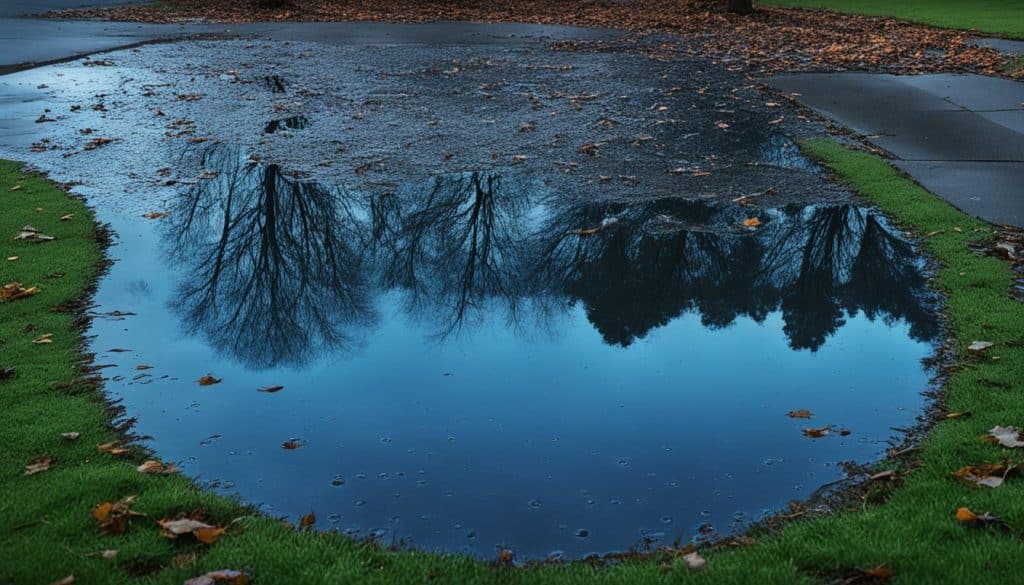
Have you ever watched heavy rain fill a yard and wondered how to stop water from heading straight for your foundation?
I’m the owner of Drainage First, serving Metro Atlanta for over 20 years. We see soggy yards, mud, and standing water that harm your property. My small team handles calls directly. We give fast, personal service and same-day written estimates.
In this short guide I explain how a common exterior fix works, what parts matter, and where things go wrong. Good slope, clean stone, and the right discharge spot decide long-term results.
Expect practical outcomes: less standing water, improved yard use, lower hydrostatic pressure near walls, and fewer basement visits after storms. We start by finding the real cause — poor grading and exterior drainage — before suggesting any intrusive interior work.
Call us at (678) 389-9544 or email carter@drainagefirst.com to discuss solutions for your Atlanta property and stop flooding before it starts.
Key Takeaways
- Drainage First is locally owned and handles service calls directly.
- Heavy rain often sends water toward foundations and causes problems.
- Proper slope, stone, and discharge make the repair last.
- Exterior fixes usually prevent the need for interior installations.
- Results include less standing water and fewer basement issues.
What Is a French Drain System?
Rain that pools near your foundation tells a clear story: water needs a better path away from the house. I’ll explain the basic idea in plain English and why homeowners rely on this fix.
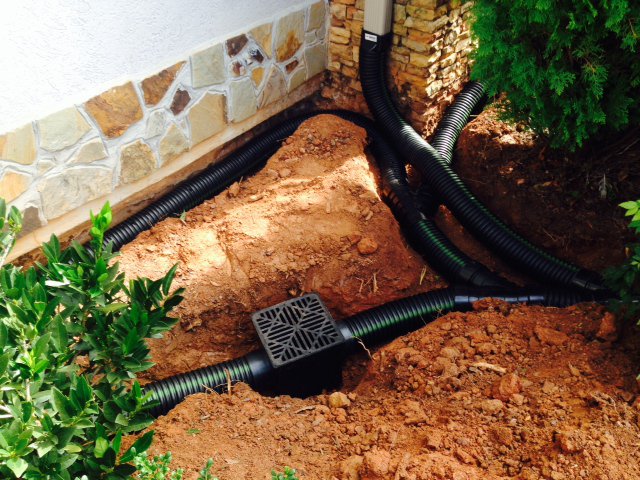
Plain definition: an in-ground drain made from a trench, perforated pipe wrapped in fabric, and clean stone. It collects water in saturated ground and moves it to a safe discharge point.
The design manages excess water and surface water around lawns and foundations. It stops surface runoff from turning into standing water, mud, and repeat flooding after storms.
How it works and why it matters
We replace tight soil with void space so water follows an easier path. Modern upgrades—perforated pipe, geotextile fabric, and clean stone—help reduce clogging over time.
- Collects water from wet spots
- Redirects flow away from vulnerable areas
- Protects foundations by lowering hydrostatic pressure
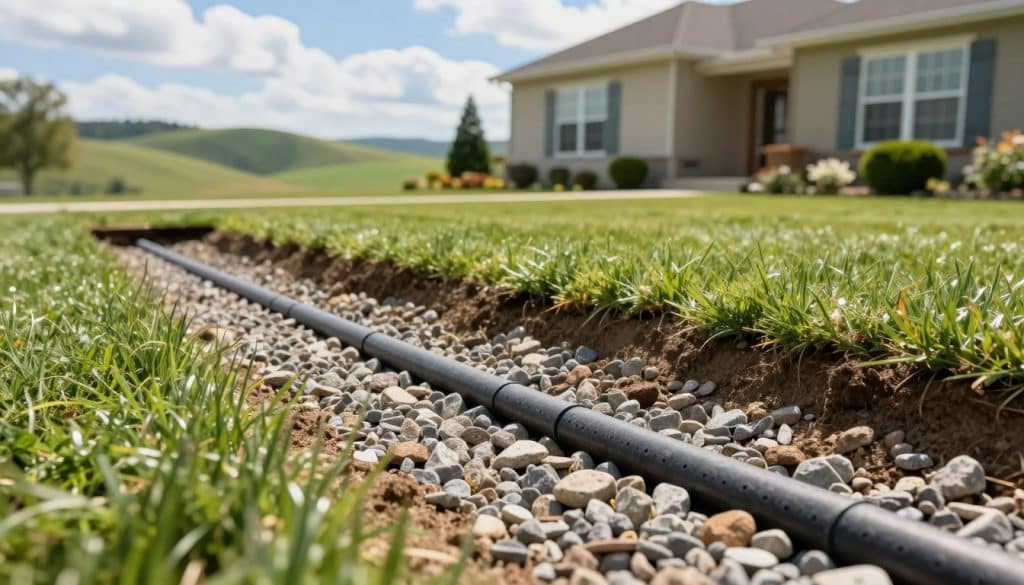
How a French Drain Works to Redirect Water Flow
When water keeps pooling in one spot, the solution starts with controlling how it moves across your yard. I build the path so gravity does the heavy lifting and the trench stays consistent from start to finish.
Gravity, slope, and the path of least resistance
Gravity moves water downhill. But it only helps when the trench and pipe have a steady slope. Without that slope, water stalls and the drain can’t work.
How the system collects water from saturated soil
Saturated soil pushes water toward any easier route. Clean stone creates void space. Water flows through those voids into the perforated pipe instead of pressing against foundations.
Where the water can discharge
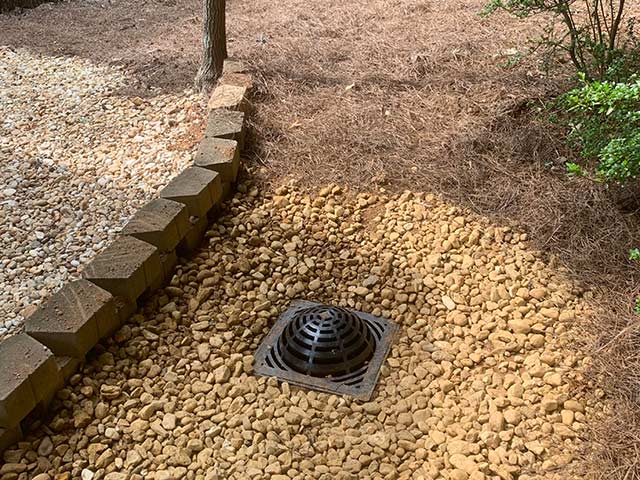
Choosing the right outlet is critical. Daylight at a lower point works when available. Other safe options include the street (where allowed), a municipal connection, a rain barrel for reuse, or a catch basin for transitions.
- Plan the out first. No outlet means trapped water and a failed installation.
- Intercept upslope when you can; don’t expect to dry a low spot with no outlet.
- Result: less surface pooling, reduced water in soil, and lower pressure on basement and retaining walls.
Key Parts of a French Drain System and What Each One Does
Good drainage starts with the parts you can see and the ones you hide in the ground. Each component plays a clear role in moving water away and protecting your foundation.
The trench: depth, width, and placement
The trench is the container that sets capacity. Typical DIY depth runs near 18 inches; width about 12 inches. Depth may vary from 8 to 24 inches depending on soil and how much water we must intercept.
Placement matters: we intercept flow upslope of the wet spot or before water reaches the house. Proper location keeps water from reaching foundation and low, muddy areas.
Perforated pipe options and hole orientation
Homeowners see corrugated and rigid pipe most often. Smooth-wall pipe gives better flow and easier fittings. Choose pipe diameter to match the expected flow and slope.
Many modern perforated pipe products have holes all around. If not, hole orientation affects how fast water enters and how sediment settles.
Gravel, stone, and filter fabric
Clean gravel creates void space so water moves much faster than it does through soil. Stone size matters; dirty or wrong-size rock speeds clogging instead of preventing it.
Filter fabric (geotextile) separates soil from the stone envelope. The fabric lets water enter while keeping fines and debris out. Skipping fabric, using dirty stone, or wrong-size gravel are the most common shortcuts that lead to failure.
- Trench: sets how much water the drains can hold.
- Pipe: carries water—pick the right type and slope.
- Stone + fabric: create voids and keep soil from clogging the structure.
When a French Drain Is the Right Solution for Your Home and Property
If puddles appear again and again near your house, that signals a problem that needs fixing. I start by looking at the outside first because most water intrusion comes from poor exterior drainage.
Yes, this likely applies to you if you have recurring puddles, muddy paths in the yard, saturated soil after rainfall, or water that tracks toward the foundation. These signs show surface and ground water collecting near the structure instead of moving away.
How exterior water becomes basement trouble
Water that lingers along the foundation line finds the easiest path into the basement—through cracks, joints, or porous materials. Improving outside drainage often stops that path and prevents interior repairs.
Hydrostatic pressure, walls, and retaining structures
Trapped subsurface water pushes on basement walls and retaining walls. That pressure forces moisture through small openings. A proper outside drain relieves that force by giving excess water a safe route away.
- Retaining wall risk: saturated backfill raises pressure and can cause movement or failure.
- Erosion and landscape loss: unmanaged flow cuts channels and strips topsoil.
- Practical approach: we focus on solving exterior drainage first to stop water before it reaches the basement or the structure.
Sometimes exterior fixes are enough. If not, the next section explains deeper perimeter options and interior choices so you can weigh less disruptive solutions first.
Exterior vs. Interior French Drains and “Weeping Tile” Explained
Soggy soil around the footing rarely fixes itself; it needs a planned path for water to leave the site.
Exterior drains intercept surface water and subsurface flow before it reaches the foundation. I prefer this approach because it often stops problems without cutting concrete or working inside the home.
Weeping tile and deeper perimeter work
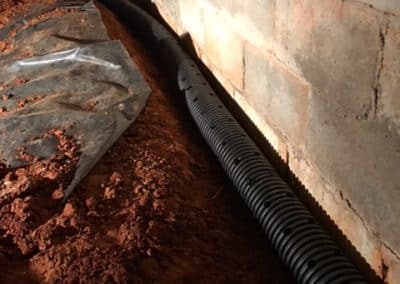
Weeping tile is simply a deeper perimeter method that reduces hydrostatic pressure at the walls. It sits lower than a typical trench and protects the foundation by giving water a safe escape point below grade.
Interior drains and when we use them
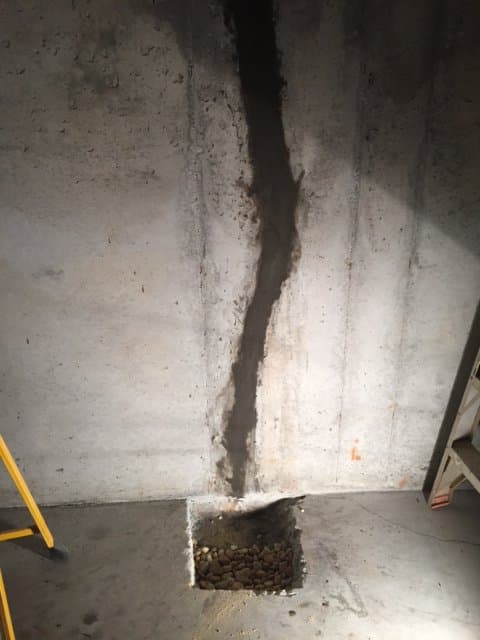
Interior systems collect seepage under the slab and move it to a sump. They work when exterior options are impossible, but they add cost, noise, and mechanical parts like pumps.
- Goal difference: exterior prevents entry; interior manages after entry.
- Disruption: interior may require cutting concrete and working in finished spaces.
- Decision rule: intercept and discharge outside when you can; use interior only as a backup.
I evaluate grading, runoff routes, soil saturation, and discharge points before recommending any plan. That owner-led review keeps my recommendations practical and cost-effective.
Planning and Design Tips for an Effective French Drain
Start with a clear map so water has a predictable route away from wet spots. I walk the lot to mark the main collection point, then trace the best path to a safe outlet on the property.
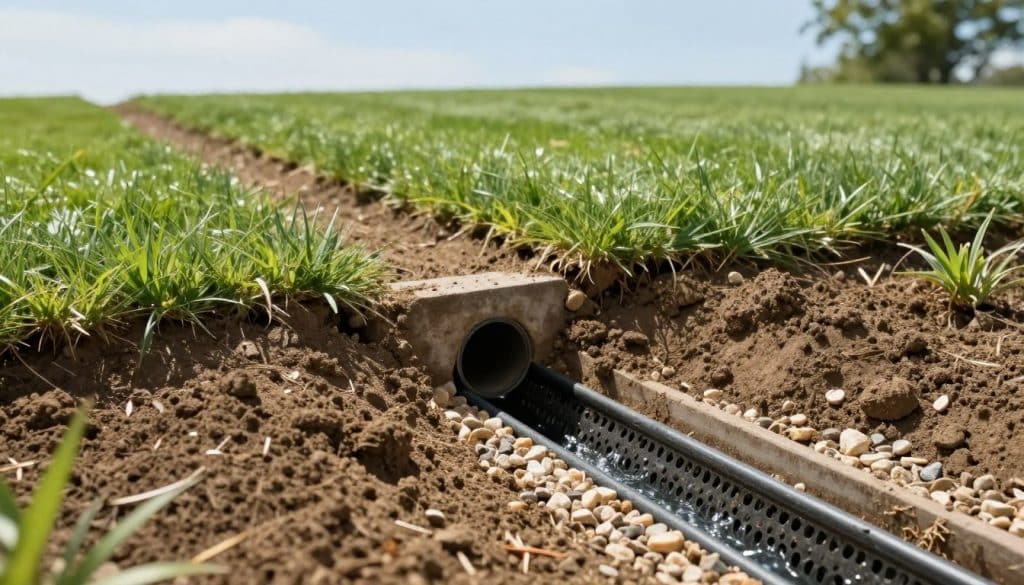
Finding collection points and mapping the path
Begin by locating low spots and where surface water gathers after storms. Mark where water should leave the area and choose the cleanest, most direct route between those points.
Soil in Metro Atlanta: clay versus sand
Many yards here have clay-heavy soil that holds water and needs higher collection capacity and filtration. Sandier mixes drain fast but raise erosion concerns, so outlets must be stable.
Slope, depth, and pipe sizing
Design with a steady fall—roughly 1 inch per 10 feet—to keep water flow moving. Match trench depth, pipe size, and run length to the expected water volume during heavy rain.
Protect landscaping and prevent erosion
- Staged excavation: protect root zones and restore grade so surface runoff sheds away from the trench.
- Stable outlets: use pop-up emitters or catch basins to avoid scour at discharge points.
- Long-term choices: clean gravel and correct fabric placement keep the repair working for years without sending water back toward neighbors.
At Drainage First I combine local soil knowledge with practical design so your drainage project protects landscaping and manages water across the area. Call for a fast estimate and hands-on planning that fits your property.
How to Install a French Drain System
Before you dig, confirm buried utilities and an approved place for water to leave the property. I call the locate service and check local rules so the installation stays legal and safe.
Locate utilities and confirm discharge
Mark the route and pick a safe discharge point that won’t send water to neighbors or public drains. Call utilities and wait for locates before any excavation.
Digging the trench and keeping slope
Dig a trench near 18 inches deep and about 12 inches wide, adjusting depth to match site needs. The key is a steady slope—about 1 inch per 10 feet—so water keeps flow toward the outlet.
Lining with fabric and building the gravel bed
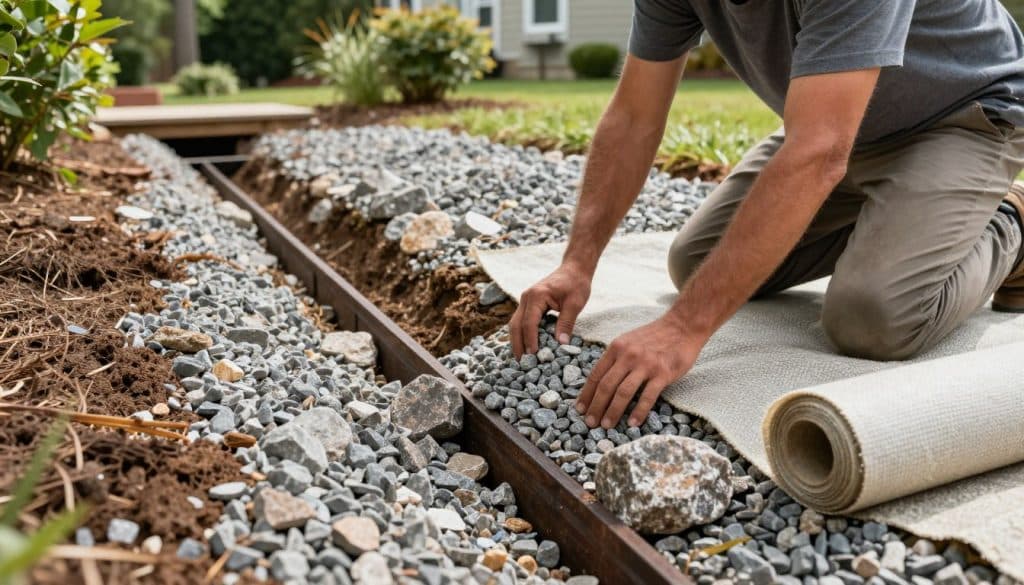
Line the trench with water-permeable fabric to stop fines from entering the stone. Add a few inches of clean gravel to form the base for the pipe.
Placing the pipe and fittings
Lay the perforated pipe on the gravel with holes facing down or per product guidance. Use smooth fittings and secure joints to keep unobstructed flow along the run.
Backfilling, wrapping fabric, and restoring grade
Cover the pipe with gravel, overlap and wrap the fabric, then backfill with topsoil. Restore the surface grade so runoff sheds away from structures, not toward them.
Testing water flow
Run water through the line immediately to check performance. Then observe during the next storm to confirm the drains move water to the chosen discharge point.
If you prefer no surprises, we handle the planning, digging, and cleanup. At Drainage First I lead the project with owner-level oversight so the installation works the first time.
Common French Drain Problems and How to Avoid Them
A great install today can fail next year if fine soil finds its way into the trench. Clogging from soil and silt is the #1 reason drains stop working. When fines migrate into stone, void space disappears and the line loses capacity.
How we prevent clogging: continuous fabric separation, clean gravel with true voids, and careful handling so the filter fabric never tears. A damaged filter still lets soil enter and shortens the life of the drain.
Insufficient slope also causes failure. If the line is flat or back-pitched, water stalls, sediment settles, and flow stops. That leads to routine maintenance or full replacement.
Stone choice and foundation risks
Wrong stone or dirty gravel fills void space instead of creating it. Water then struggles to enter the pipe and may pool near walls.
Poor design near the foundation can make matters worse. A trench placed too close or graded improperly can concentrate water next to the foundation and raise basement seepage risk.
- Warning signs: a wet strip over the trench, water exiting at the wrong place, soggy spots that never dry, or basement dampness after storms.
- Fix checklist: continuous fabric, clean stone, proper slope, and discharge planned upslope or to a safe outlet.
Our approach at Drainage First focuses on exterior grading first so water moves away from the structure. We design and install to avoid these common problems and keep your drains working for years.
Conclusion
This final note puts the main points in plain terms so you can act with confidence.
You should now understand a french drain role: gravity moves water through a trench, into stone, then into perforated pipe wrapped in fabric. Each part — trench, gravel, fabric, pipe — must work together for the installation to last.
Do it right or don’t do it. Steady slope, clean materials, and a real discharge plan separate a lasting repair from a buried problem.
Use this approach when standing water, saturated ground, runoff toward your home, or pressure at foundations causes concern. Exterior interception usually solves most cases; interior fixes are a backup when exterior discharge isn’t possible.
Call me for a fast, owner-led evaluation and same-day written estimate: (678) 389-9544 or carter@drainagefirst.com. I handle calls myself across Metro Atlanta and nearby areas and will recommend the practical solution your property needs.