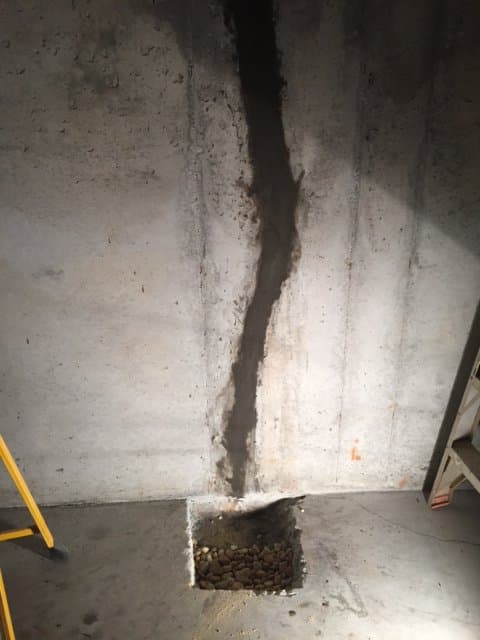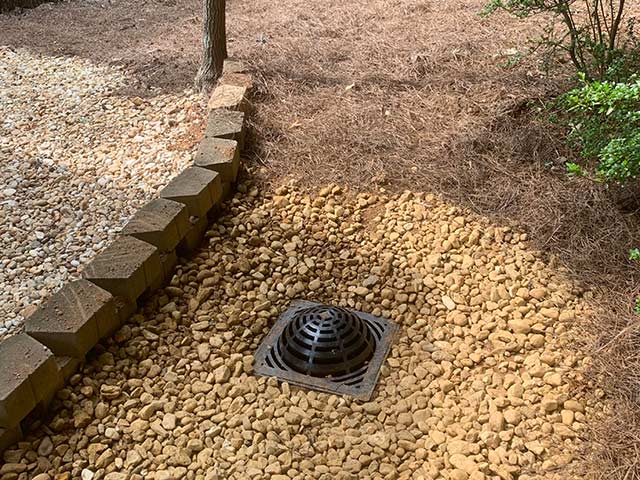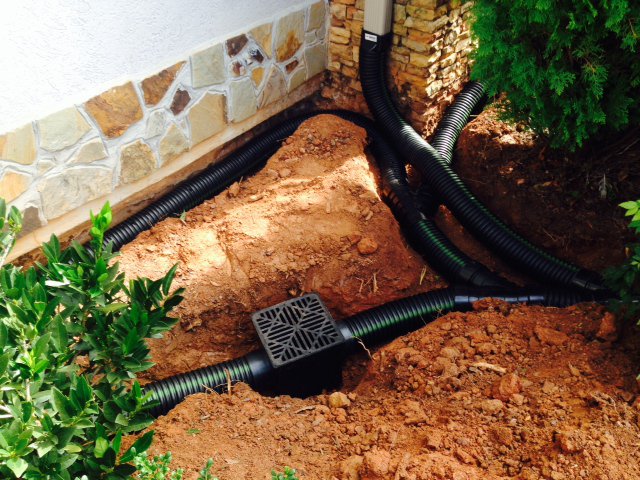
Ever wondered why water still finds its way toward your foundation after heavy storms?
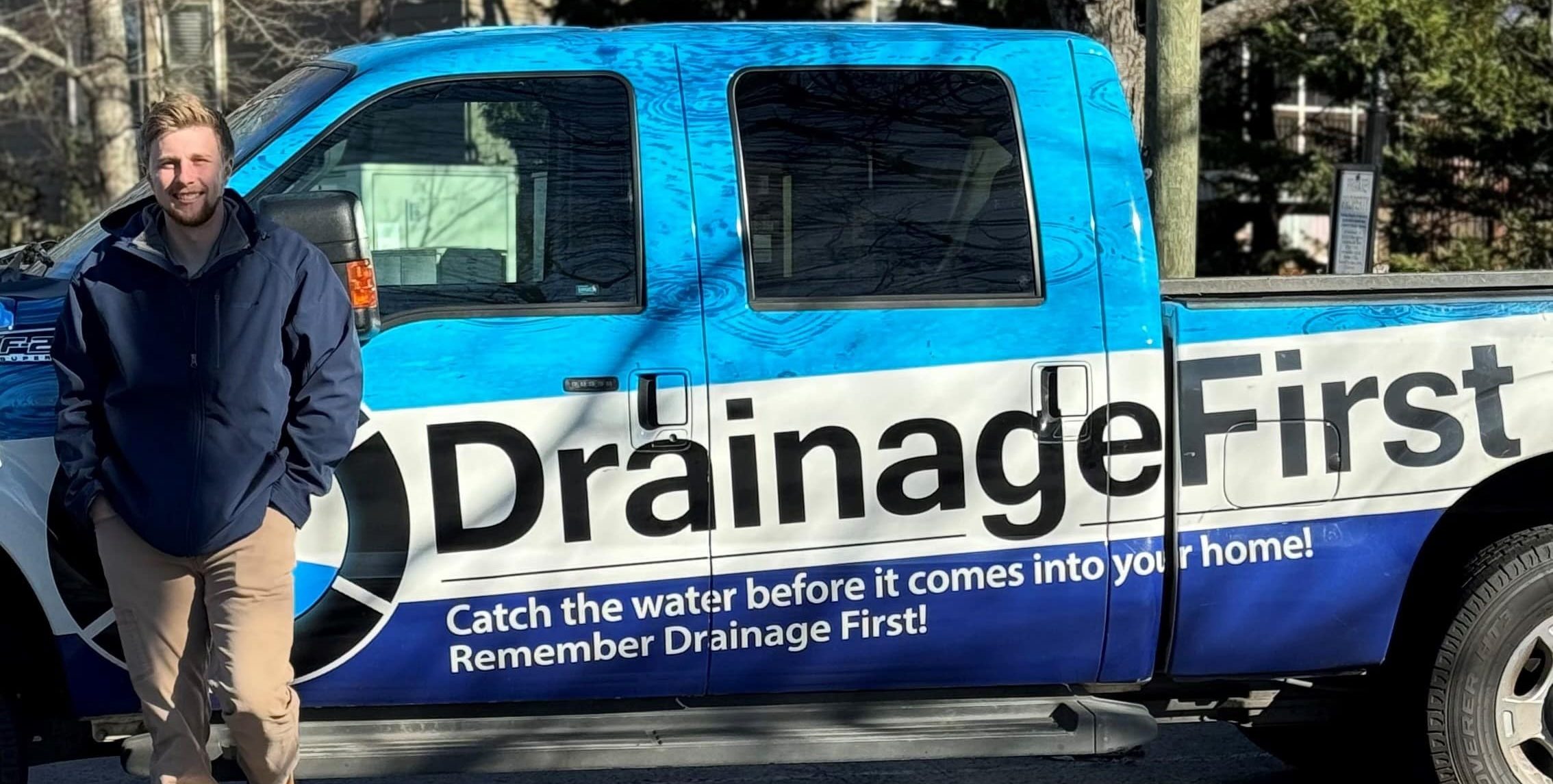
I’m the owner of Drainage First, and I’ve spent 20+ years solving that exact problem across Metro Atlanta. I explain in simple terms how a drain channel with grate intercepts surface water before it reaches slabs, garages, or basements. This approach often keeps you from costly interior fixes.
Modern modular kits make installation fast for common residential applications like driveways, patios, and pool decks. Most kits use stainless steel screws to fasten the grates and fit into a trench drain system that performs reliably when sized and sloped correctly.
We focus on practical fixes: plan, trench, base, dry-fit, concrete, pipe connection, and finalize grate fastening. I’ll point out failure points we fix in the field and keep safety and maintenance in view all the way.
Call us at (678) 389-9544 or email carter@drainagefirst.com to discuss solutions for your Atlanta property and stop flooding before it starts.
Key Takeaways
- Surface interception prevents water from reaching foundations.
- Modular kits speed installation and suit many residential applications.
- Proper slope and outlet sizing avoid common failures.
- Choose grates that match traffic and slip-resistance needs.
- Drainage First offers owner-led estimates and hands-on service in Atlanta.
Planning Your Drain Channel with Grate System
Choosing the right parts before you dig cuts costs and prevents surprises. I’ve found that a clear plan often saves homeowners thousands by avoiding interior repairs later. In Metro Atlanta, our 20+ years of field work show that routing and discharge decisions are the real money-savers.
I start by mapping common applications around the home: driveways collecting sheet flow, patios that puddle, walkways that funnel water, pool decks where safety matters, and garage or basement entries where runoff becomes interior seepage.
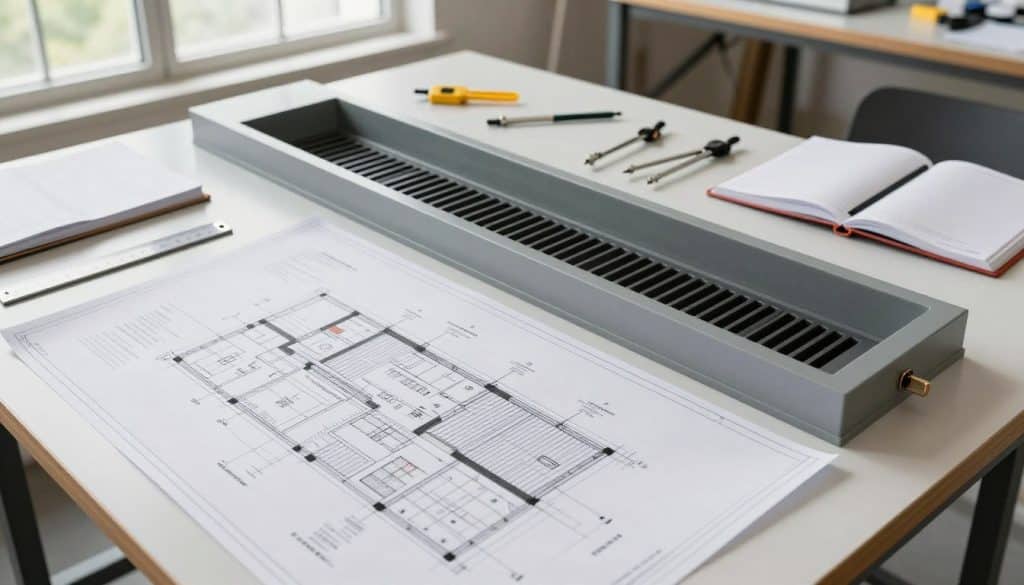
Pick channel size based on expected flow. Deeper sections move more water during heavy storms. Decide on end versus bottom outlets early—bottom outlets save surface length but affect trench depth and pipe routing.
- Materials: galvanized steel for light residential loads, stainless steel for corrosion resistance and higher load needs, and ductile/cast iron for heavy traffic.
- Load classes: A (3,300 lbs), B (27,500 lbs), C (55,000 lbs), D (88,000 lbs) — match the grate to real vehicle use.
- Modular features: look for interlocking joints, slide-in end caps/outlets, and knockout bottom outlets sized for 3″ and 4″ fittings.
Plan discharge routes to daylight downslope or tie into approved solid pipe away from foundations. Verify pipe compatibility (S&D, SCH40, SDR35) against the product spec sheet before you cut.
We provide same-day written estimates across Metro Atlanta. Call (678) 389-9544 or email carter@drainagefirst.com to lock in a plan that saves you time and money.
How to Install a Trench Drain Channel and Grates
Start by watching how water moves across the surface during a storm. Mark the high side and the low side. That observation sets a reliable layout line and slope before any digging.
Layout and slope
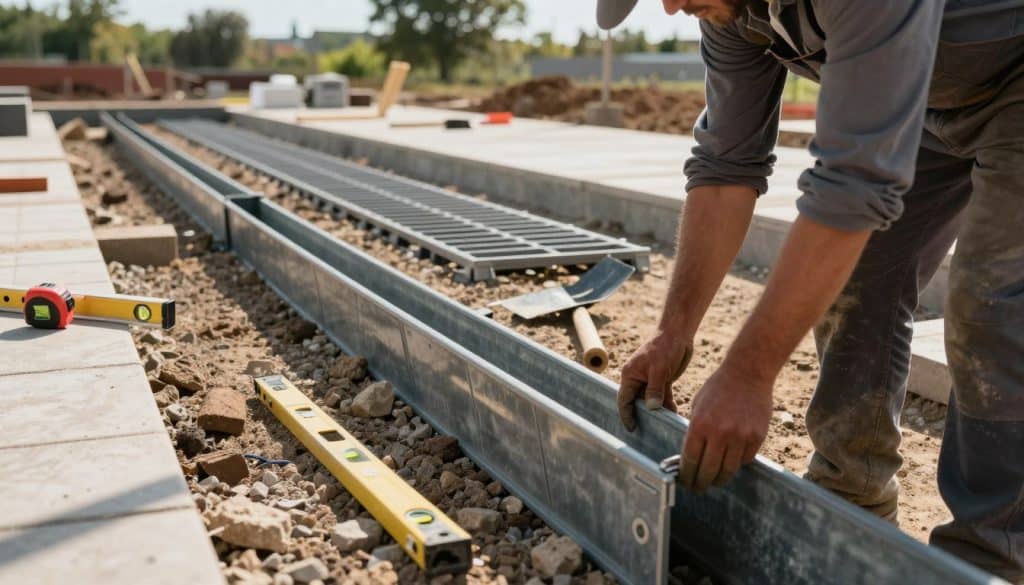
I set the line to catch sheet flow, then pitch the run so water never pools. Verify slope with a level and string. Aim for a steady fall into the outlet pipe so the system self-cleans when it runs.
Excavation and base prep
Cut the trench wide enough for the modular 40″ sections and bedding. Use compacted gravel under the body so the unit sits rock-solid and remains level under load.
Dry-fit and accessories
Snap interlocking sections together and test end caps, end outlets, corners and knockout bottom outlets. Confirm outlet location before you set final depth.
- Rebar clips: Lock sections with rebar anchor points so they can’t float during the pour.
- Concrete encasement: Provide 4″-6″ under and along sides for heavy-duty ratings—this transfers wheel loads into the slab, not the plastic.
- Outlet tie-in: Match 3″ or 4″ S&D, SCH40, or SDR35 pipe sizes per the product spec sheet.
Finish by setting grates flush and fastening with stainless steel screws so they stay serviceable. My goal is simple: move water away from the house efficiently and affordably. Call (678) 389-9544 or email carter@drainagefirst.com for owner-led installation or repair.
Maintenance, Cleaning, and Long-Term Performance
Simple checks after heavy rains prevent most common failures we fix in the field. I focus on quick, homeowner-friendly steps that keep exterior drainage working and stop basement or garage seepage.
Routine checklist
- Remove surface debris and pine straw so water can enter the system.
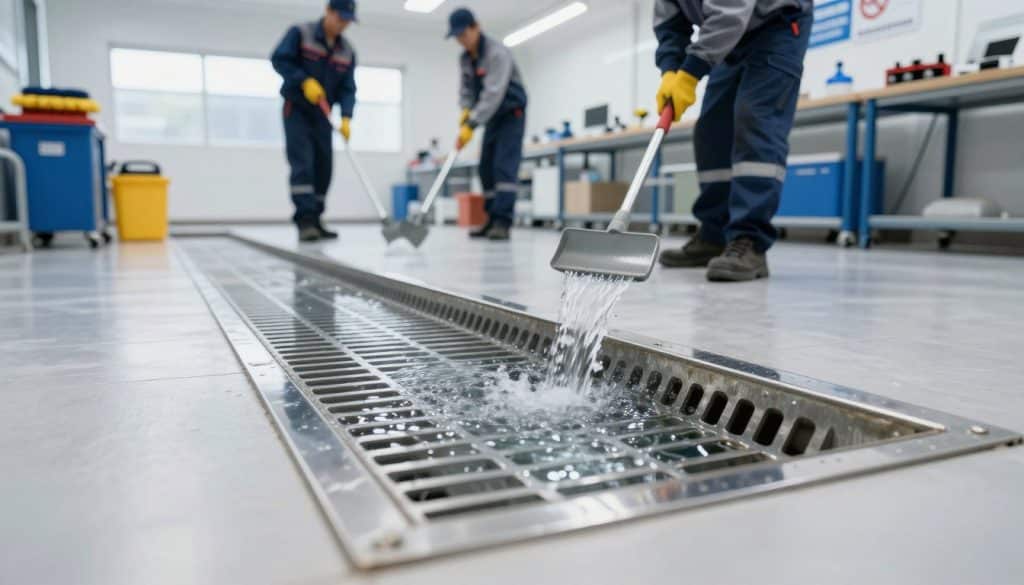
- Lift the grate carefully and rinse the channel; flush sediment toward the outlet.
- Inspect joints and end caps for separation or shifting; tight joints keep flow steady into the pipe.
Protecting metal and long-term tips
Most systems use stainless steel fasteners, so grates come off for service. For plain steel or ductile iron, expect surface rust over time.
Practical care: wipe ductile/cast iron parts with a thin oil film now and then. Galvanized steel holds up longer in wet areas. Stainless steel keeps a cleaner look and resists corrosion.
- Plan seasonal clean-outs in Metro Atlanta—leaf and clay buildup happen fast.
- Replace items from your cart by matching size, load class, and fastener type so parts stay secure and flush.
- Call us when water keeps returning, channels shift, or concrete cracks near the run: (678) 389-9544 | carter@drainagefirst.com.
Conclusion
Stopping sheet flow at the surface prevents basement problems before they start. A properly planned channel and steel system redirects water away from the foundation. Match outlets, slope, and bedding to the product spec sheet so the run works long-term.
Choose materials for the job: galvanized steel or stainless steel for corrosion resistance, or heavier ductile options where traffic demands it. Keep grates serviceable with seasonal cleaning and quick inspections.
I lead owner-run visits across Metro Atlanta, Georgia and nearby areas. We give same-day written estimates and focus on practical, affordable fixes—not upsells. Call (678) 389-9544 or email carter@drainagefirst.com to schedule an assessment and get the job done right.