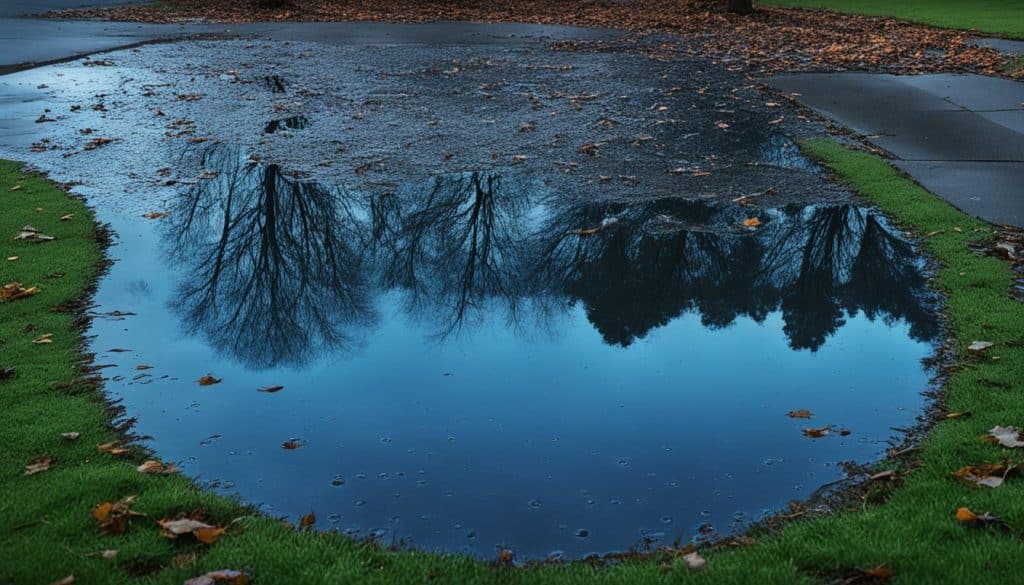
I often get asked a blunt question: how to fix basement wall leak problems before they worsen—can a small drip mean serious damage? That single, quiet drop often points at a larger water-management issue under your home.
In Metro Atlanta, heavy rains and clay soil push water against underground walls. I lead Drainage First and have seen small damp spots become mold and water damage when the real source is poor grading and roof runoff.
My goal in this guide is simple. I want to help you stop water intrusion, protect your basement and foundation, and avoid costly interior waterproofing when common-sense drainage will do. I explain what you can handle today and when exterior drainage work is required.
If you want an owner-led assessment with a same-day written estimate, call (678) 389-9544 or email carter@drainagefirst.com.
Key Takeaways
- Even small damp spots signal a bigger water problem at the foundation.
- Direct roof runoff away from the house—this often prevents repeat water entry.
- We focus on the source: grading, surface runoff, and exterior drainage first.
- Atlanta clay and heavy storms raise water pressure against underground surfaces.
- Owner-led visits mean fast, personal service and same-day written estimates.
Why Basement Walls Leak in the First Place
Moisture in the lower level often starts outside, not inside. I focus on the root causes so you can prevent repeated problems and avoid costly interior fixes.
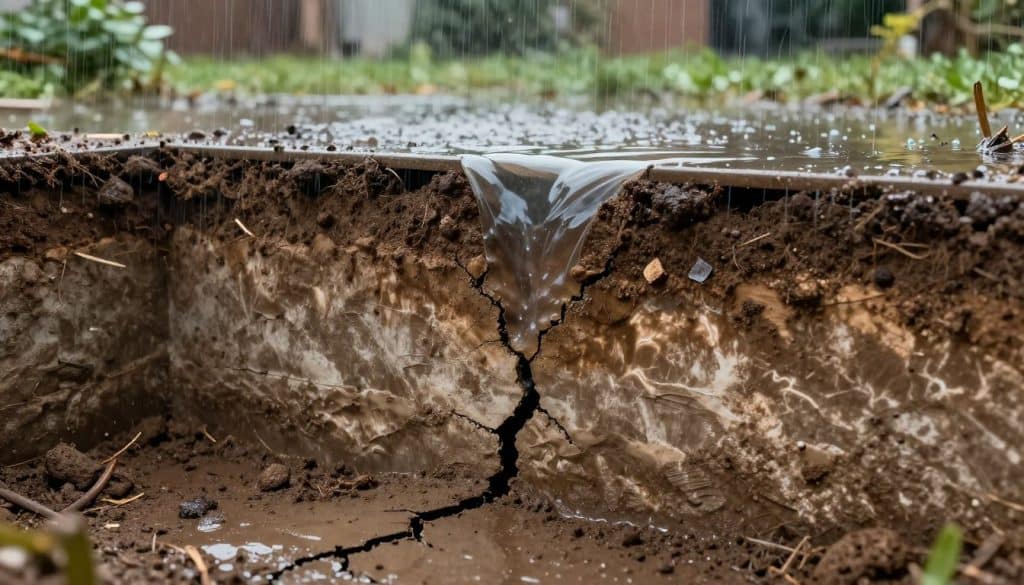
Hydrostatic pressure builds when saturated soil holds and pushes water against your foundation. That force forces water through tiny cracks and porous concrete over time.
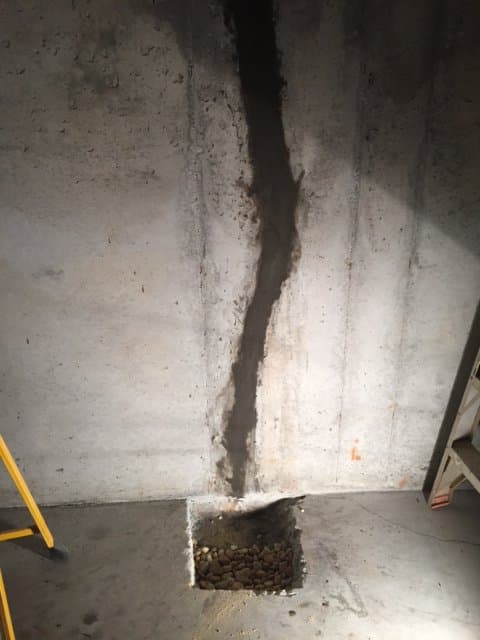
Cove joint seepage is common. The seam where a wall meets the floor is the easiest path for water during heavy storms. Once it shows up there, moisture can spread across the floor.
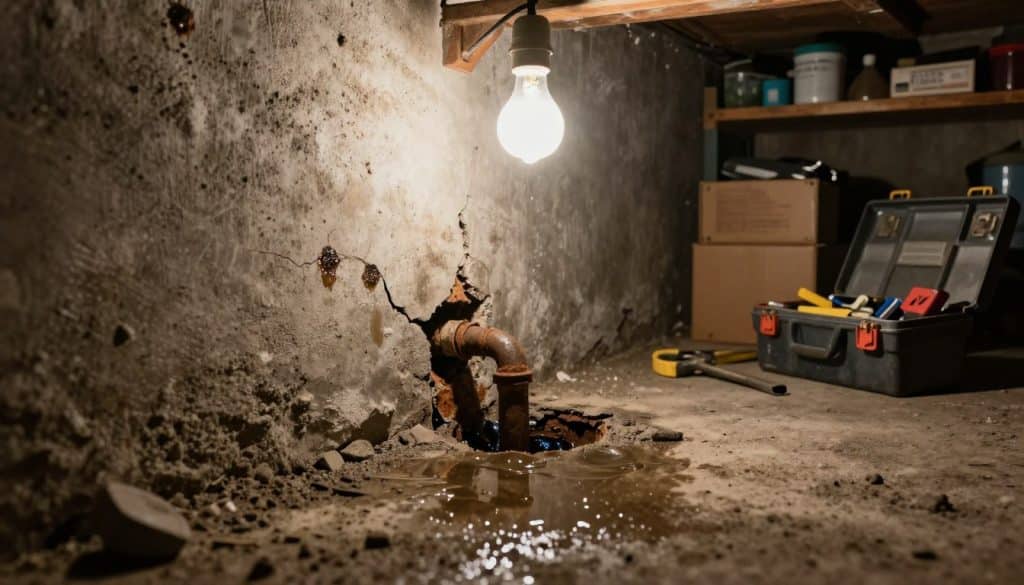
Foundation cracks and small floor cracks form from settling and stress. Tie rod holes and honeycombs (air pockets in poured concrete) are common weak points. They can leak even if the rest of the wall looks sound.
Roof runoff matters. Gutters or downspouts that dump water at the house raise the amount of standing water near the foundation and increase the chance of basement leaks.
Window wells can act like a hidden bathtub if they lack drainage. And remember: plumbing leaks in nearby pipes sometimes mimic foundation water intrusion, which makes accurate diagnosis critical.
- Manage surface drainage first
- Clear wells and extend downspouts
- Inspect joints and common entry points
How to Find the Source of a Basement Leak (Before You Repair Anything)
A quick, focused inspection often reveals the true source of a basement wet spot. I ask homeowners to start by noting where water appears and when it shows up.
What to look for: damp walls, small streams, puddling, and stain lines. Track whether moisture starts at the seam where floor meets wall or along the face of the wall.
- Check the cove joint first — it is the most common entry point for basement leaks.
- Note timing: after heavy rain, snow melt, or when a fixture runs. Timing points to the source.
- Inspect window wells for standing water, debris, or overflow signs that push water toward the foundation.
- Look above grade for siding gaps, filled gutters, and spots where water runs down the house toward the foundation.
- Rule out plumbing by checking ceilings, nearby fixtures, and any dampness that appears in dry weather.
Document findings. Take photos, note dates and weather, and mark where puddles form. We use that info at Drainage First to diagnose faster and avoid wasted interior work.
Do not skip fixing outside drainage issues you find during inspection. Even a good interior patch will fail if the source at the exterior remains unchecked.
How to Fix Basement Wall Leak: Quick Repairs You Can Do Today
Start simple: safety first, then quick concrete patches can stop many small water entries. I’ll walk you through safe prep, fast-setting materials, and what these repairs can actually achieve.
Safety and prep: Wear protective gloves and a dust mask when mixing concrete or hydraulic cement. Gather tools and mix only what you can use quickly; hydraulic cement sets very fast.
Surface prep: Chip away loose concrete and clean the crack so the material bonds. Open narrow cracks slightly to give packing room; remove old coatings if needed before repair.
- Hydraulic cement packing: Push the cement into the crack and tamp firmly. It expands as it sets to resist active seepage.
- Polyurethane masonry caulk: Use this for small joints and gaps where water is light. Do not use it where water pushes through large defects.
- Waterproofing coatings: Apply as a secondary barrier after repairs dry. Coatings can hide moisture but won’t stop external hydrostatic pressure.
Aftercare: Run a dehumidifier, increase airflow, and dry the floor quickly to reduce mold growth risk. Monitor damp spots over several rain events.
Reality check: If repairs hold briefly but water returns after storms, the real solution is exterior grading and drainage. For fast, owner-led assessment and a same-day written estimate, contact Drainage First — we handle the full solution from quick fixes to foundation repair planning.
Stop Water at the Source With Exterior Drainage and Grading Solutions
I focus on stopping water before it meets the foundation. That approach is faster, cleaner, and usually less costly than interior systems. In Metro Atlanta, clay soil and heavy storms make outside work high-return.
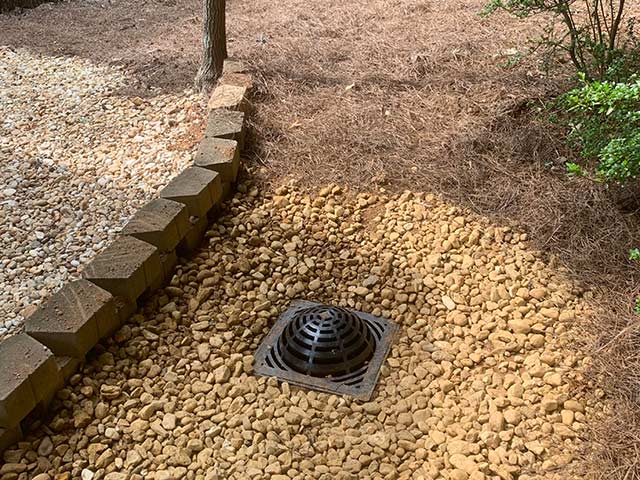
Cleaning gutters and extending downspouts
Clear gutters regularly and extend downspouts so discharge flows well away from the foundation. A short checklist helps:
- Remove debris each season.
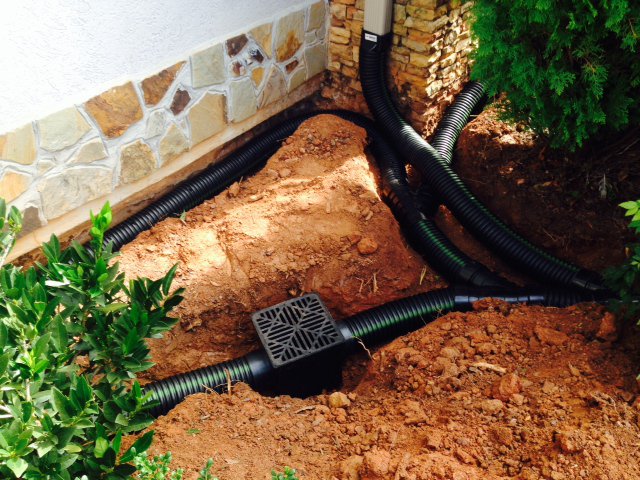
- Extend downspouts several feet so water does not soak the soil at the foundation line.
- Check connections and splash blocks for proper flow.
Fixing negative slope and regrading soil
Negative slope sends surface runoff toward the house. I regrade a small berm or slope so water moves downhill and away foundation lines. Proper grading reduces hydrostatic pressure and lowers the chance of repeated moisture at basement walls.
Keeping window wells clear and draining properly
Window wells can trap water and push it against the wall. Keep wells free of leaves, confirm the drain is open, and add gravel if needed to improve flow during storms.
When exterior drainage beats interior systems
Outside-first solutions remove the cause rather than manage the effect. Interior drains and sump pumps work, but they often follow repeated failures of grading or gutter work. We only recommend interior systems when groundwater pressure stays high after exterior fixes.
When a drain tile approach makes sense
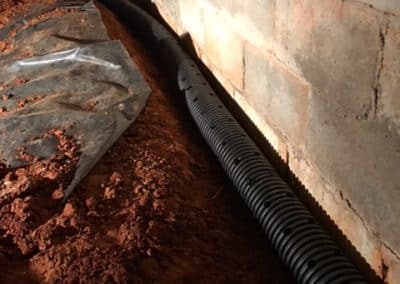
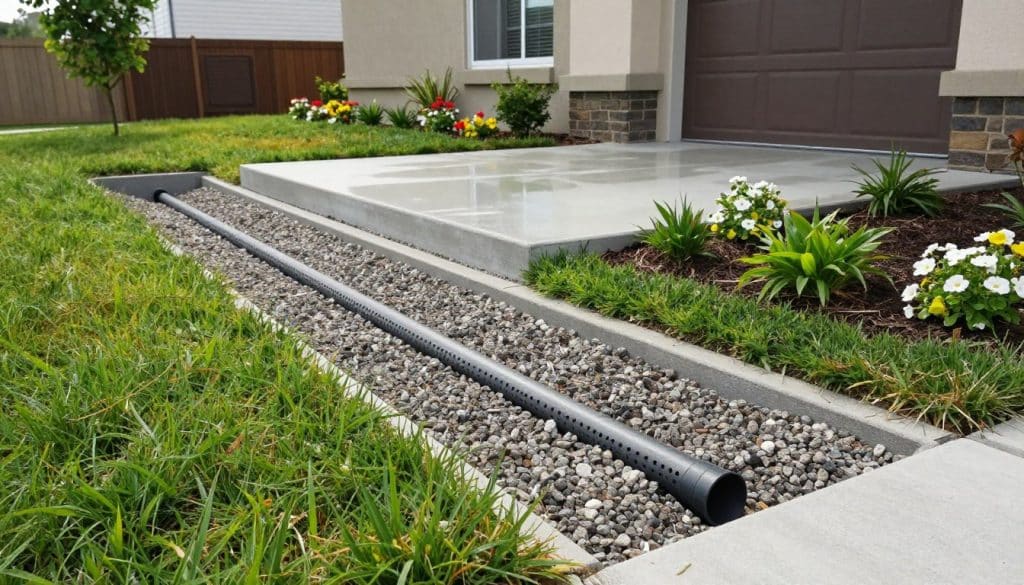
A perimeter drain tile helps when hydrostatic pressure builds around the foundation. It captures groundwater and routes it away. For persistent pressure and repeated water events, a drain tile paired with a proper discharge point often ends the cycle of damage.
When to Call a Professional for Basement Waterproofing and Foundation Repair
If your moisture returns after repairs, it’s time for an expert review. Ignoring repeated damp spots or widening foundation cracks risks larger damage and higher repair costs.
Warning signs that need a pro:
- Widening foundation cracks or new foundation cracks near corners.
- Water that comes back after rain or after you seal an area.
- Ongoing water damage, mold, or recurring damp floors and walls.
Pros commonly recommend exterior waterproofing membranes, a French drain around the perimeter, or an interior drain system tied to a reliable sump pump for chronic water. Exterior solutions stop water before it enters. Interior systems collect and remove it once inside.
Vetting a contractor: Check reviews, request references, and compare approaches—not just price. Ask for a written scope, timeline, and a clear explanation of the problem and proposed solutions.
At Drainage First, I lead owner-led visits, explain exterior-first options, and deliver a same-day written estimate in the Metro Atlanta area. Call (678) 389-9544 or email carter@drainagefirst.com for a no-sales-pressure assessment.
Conclusion
Stop guessing: most lasting solutions start with controlling surface water around your home. Control at the source and you cut hydrostatic pressure and repeated water damage to foundation and basement walls.
Identify the entry point first—cove joint, a crack, or a plumbing mimic—then choose the right repair. Quick interior patches like hydraulic cement or sealant can help small leaks. Long-term success depends on gutters, extended downspouts, proper grading, and clear window wells that move water away foundation.
If moisture returns or you see mold or new cracks, call me. Drainage First is locally owned and owner-led in Metro Atlanta for 20+ years. We offer fast, personal visits and a same-day written estimate. Call Drainage First, (678) 389-9544, or email carter@drainagefirst.com.