A French drain for a residential yard is often installed in a trench about 18 to 24 inches deep, but there is no single depth that works for every property. The right depth depends on where water collects, the soil, the slope, the location of utilities, and where the water can safely discharge. A drain designed to help protect a foundation or basement may require a different depth from one intended to address a wet lawn.
At Drainage First, we evaluate drainage problems across Metro Atlanta and surrounding areas. If you are unsure what your property needs, request an estimate or call (678) 389-9544.
French Drain Depth at a Glance
- For many yard installations, an 18- to 24-inch trench is a starting point, not a universal specification.
- Foundation, basement, groundwater and retaining-wall drainage require an assessment of the specific conditions.
- Trench depth and pipe depth are different measurements; both depend on the materials and design.
- Depth alone does not determine performance. A reliable outlet, suitable slope, proper materials and utility clearance also matter.
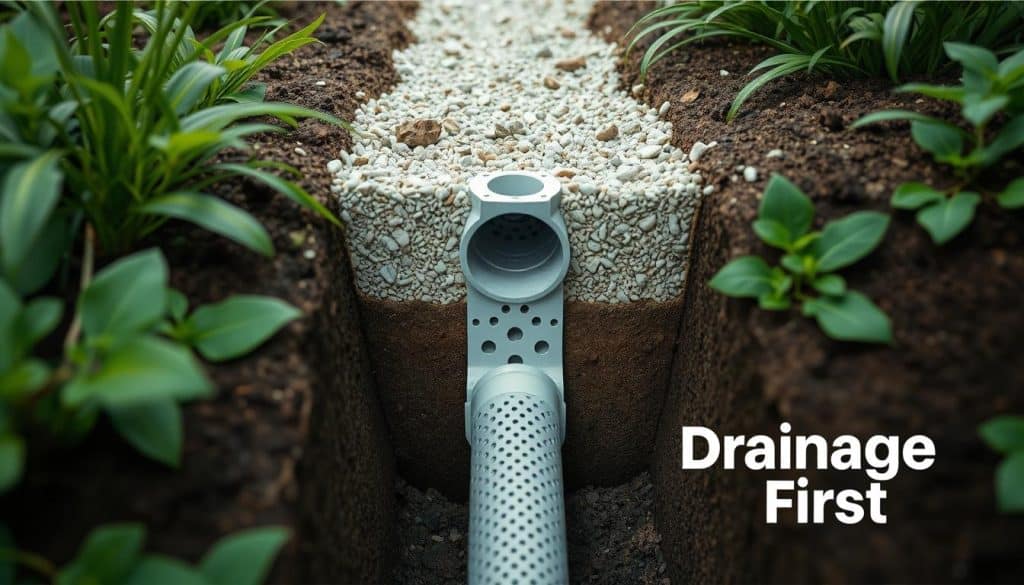
How Deep Should a French Drain Be for Different Problems?
Wet Yards and Surface Water
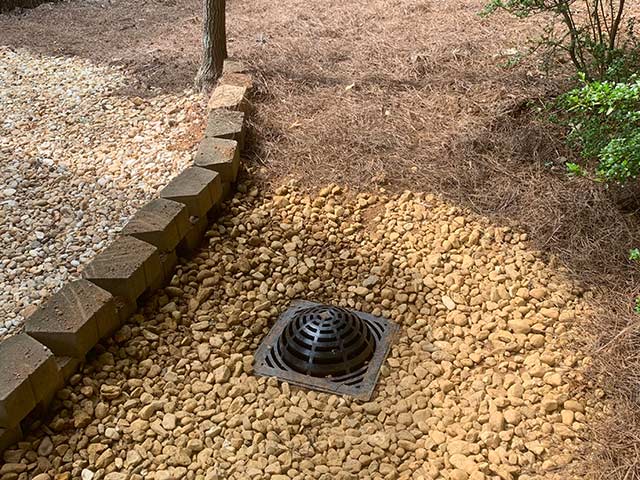
For a yard where water pools after rain, the design starts with identifying how runoff reaches the low area and where it can leave the property. A typical trench may be around 18 to 24 inches deep, but the appropriate installation varies with the water source, grading and available outlet. Shallow surface runoff may also call for a different collection approach, such as a catch basin, depending on the site.
Foundation and Basement Drainage
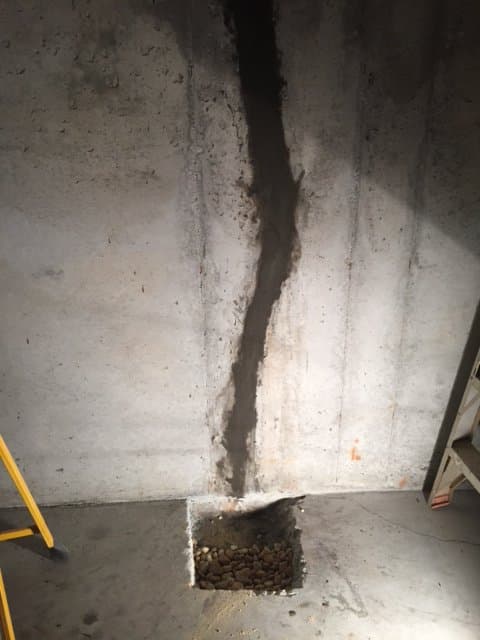
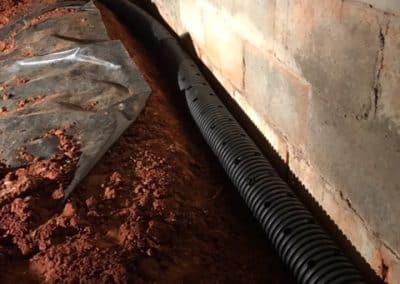
When water accumulates near a foundation or basement, the drain may need to intercept water at a different level from a yard drain. The footing, foundation construction, access, groundwater and discharge point must all be evaluated. Excavation near a foundation needs careful planning; a deeper trench is not automatically the best or safest solution.
Groundwater and Retaining Walls
Subsurface water and retaining walls present their own design considerations. A professional can determine where water is entering, whether an outlet is available and how the drainage system should relate to the structure. Local requirements and site conditions may affect the design.
What Determines the Right Depth?
- Water source: Rainwater, roof discharge and groundwater do not necessarily require the same solution.
- Soil and grading: Soil characteristics and the shape of the property affect where water moves and collects.
- Slope and outlet: A gravity drain needs a workable path to a suitable discharge point.
- Structures and utilities: Foundations, retaining walls, buried lines and access can limit the location and depth of excavation.
- Pipe and aggregate: Pipe size, bedding, gravel, filter fabric and surface finish influence the finished trench dimensions.
How Does Slope Affect a French Drain?
Depth and slope need to work together so water can reach a suitable outlet. A 1% slope represents approximately 1.2 inches of fall over 10 feet, or 1 foot over 100 feet. This is a measurement conversion, not a substitute for a site-specific design. The appropriate slope and discharge approach depend on the system and property.
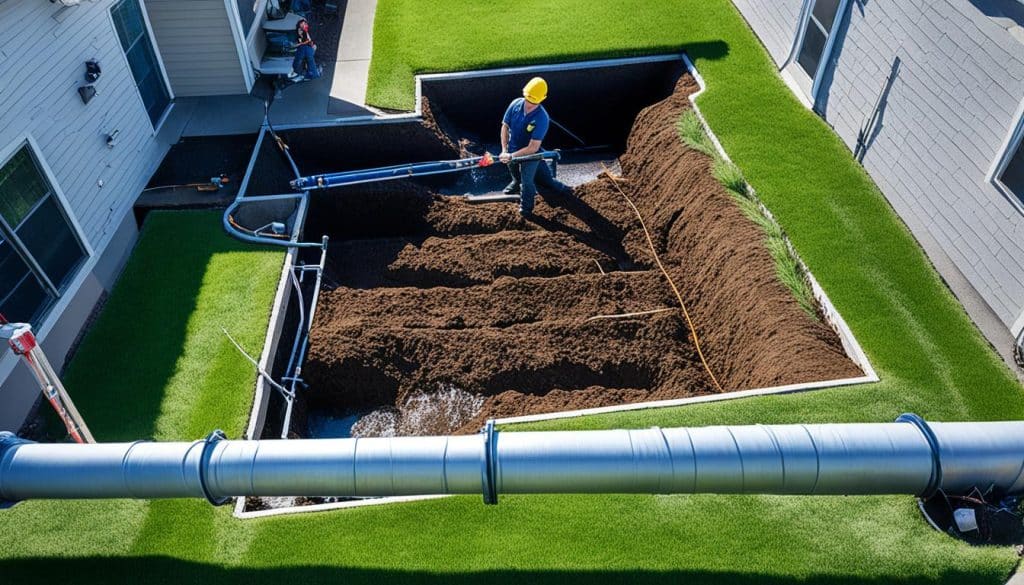
French Drain Installation: What Matters Besides Depth?
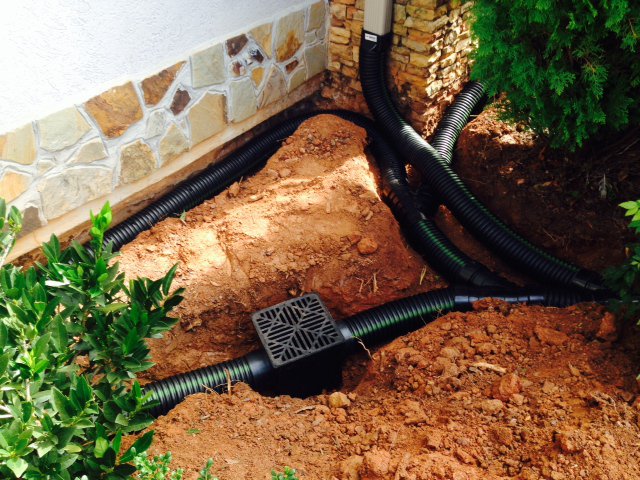
A typical system uses a trench, suitable filter fabric, clean aggregate and a perforated pipe connected to an appropriate discharge route. The layout and materials should be selected for the water source and site. Locate underground utilities before digging, and check applicable local requirements before choosing an outlet or beginning excavation.
For a general overview of yard drainage, see the Delaware Department of Natural Resources and Environmental Control guide to French drains. Local conditions and regulations may differ in Georgia.
Frequently Asked Questions
Is 18 inches deep enough for every French drain?
No. It can be a useful starting point for some yard projects, but foundation drainage, groundwater, utilities and the available outlet may require a different design.
Can a French drain be too deep?
Yes. Unnecessary excavation can increase cost and complicate the route or outlet. The goal is to intercept the relevant water while providing an effective, properly designed discharge.
Is trench depth the same as pipe depth?
Not necessarily. Bedding below the pipe and aggregate or surface materials above it mean the trench bottom and the pipe sit at different levels. Ask how each measurement is taken when comparing estimates.
Can I install a French drain myself?
Some homeowners consider a small project, but locating utilities, planning the route and choosing a lawful, effective outlet are important. If the problem involves a foundation, basement or complex grading, an on-site assessment can help identify the appropriate solution.
Get Help With Your Drainage Problem
Drainage First helps homeowners assess drainage problems in Metro Atlanta and surrounding communities. Learn more about our French drain services, browse our service areas, or request an estimate. Call (678) 389-9544 to discuss your property.