Gravel for French Drain: Expert Guide by Drainage First

On This Page

I’ve seen yards in Metro Atlanta where standing water damages landscaping and invites pests, which is why using Gravel for French Drain systems is so effective. Left unchecked, that same water can seep into foundations and threaten basements.

At Drainage First I take a hands-on approach. We’ve served Metro Atlanta area for over 20 years. We make service calls ourselves and deliver a same-day written estimate so work starts without long delays.

A properly built french drain channels water away from your home and protects underground walls. This guide explains, in plain language, why choosing the right rock and materials matters and how correct installation keeps water moving instead of pooling.

We’ll lay out practical, affordable fixes we use every day and note when a DIY job is reasonable versus when it’s smarter to call us at (678) 389-9544 or email carter@drainagefirst.com.

Key Takeaways

  • Standing water threatens landscaping and can lead to basement leaks.
  • A correct french drain directs water away from your foundation.
  • Material choice and installation details make or break long-term performance.
  • Drainage First provides fast, personal service and same-day estimates.
  • We focus on practical fixes that avoid costly interior repairs.

How French Drains Work to Move Water Away From Your Home

When water pools near a foundation, the fix often starts underground, not on top of the soil. I install a simple but effective system: a sloped trench lined with stone and a perforated pipe that carries water away to a safe outlet.

Runoff from rain soaks through the bedding and into the pipe. Rising groundwater can also enter when the water level reaches the trench depth. Gravity then moves the captured water downslope to a catch basin or storm line.

Why the design matters:

  • Stone acts as a filter and fast path so water won’t sit against the foundation.
  • Maintaining slope prevents standing water in the pipe and keeps steady water flow.
  • We set the perforated pipe holes facing downward so the pipe starts collecting sooner, not later.

Common signs you need these drains include repeated puddles, soggy spots that won’t dry, or water collecting near underground walls. Fixing slope and material choices keeps water away and protects basements in Metro Atlanta conditions.
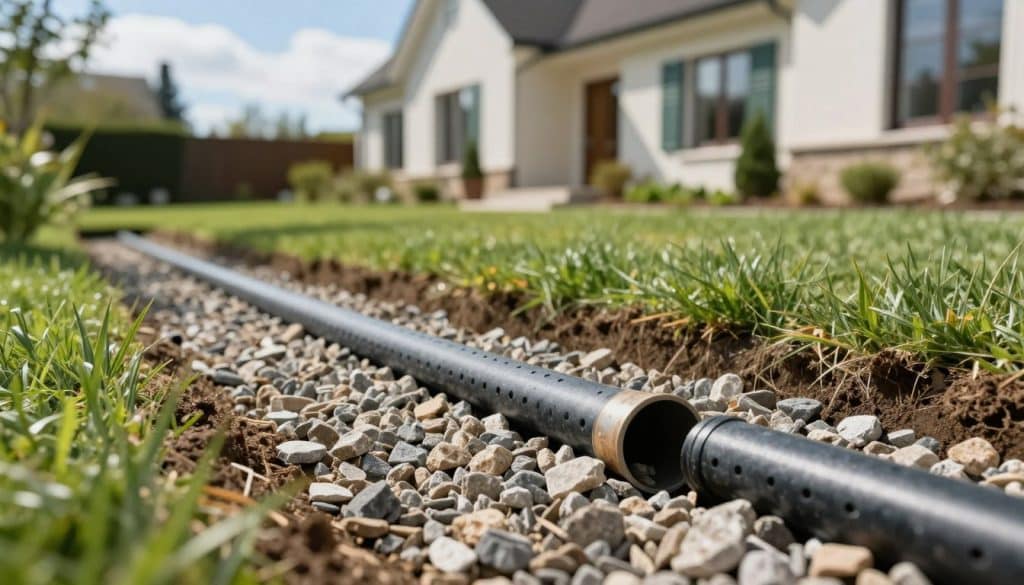
A detailed illustration of a French drain system in a residential setting, foreground showcasing a freshly installed gravel bed and perforated drainage pipe, capturing the intricacies of the design. In the middle ground, lush green landscaping surrounds the drain, emphasizing water flow away from the foundation of a charming home. The background features a clear blue sky and soft clouds, enhancing the serene mood of effective drainage. Soft, natural lighting filters through the scene, highlighting the textures of the gravel and soil. Shot from a low angle to emphasize the draining mechanism's functionality, the image conveys a sense of efficiency and professionalism, ideal for readers seeking to understand how French drains work to manage water effectively.

Choosing gravel for french drain performance and longevity

The rock you place around the pipe controls flow, clogging risk, and long-term performance.

Best options: I recommend washed river rock or hard, angular granite chips. Washed river rock offers smooth voids. Angular stone holds shape and resists breakdown.

Ideal size and when to go larger

For most systems, pieces near 1 inch strike the right balance of permeability and filtration. That size lets water move fast while keeping fines out of the pipe.

If you build a pipeless system, step up to roughly 1 1/2-inch stones and fill the trench to about two-thirds. The trench itself becomes the main channel in that setup.

What to avoid and matching guidance

  • Avoid pea gravel and dusty, unwashed mixes; fines pack and slow flow.
  • Make sure stones are larger than the pipe perforations so rock won’t enter and clog the holes.
  • At the supply yard, look for clean, consistent diameter and minimal fines—those checks save service trips later.

How to Install a French Drain With the Right Gravel, Pipe, and Fabric

Begin the job by planning where the system will exit and confirming local rules and utility locations. Call utility marking services and check ordinances so your installation doesn’t create legal or neighbor issues.

Dig the trench to the typical size: aim for about 9–12 inches wide and at least 18 inches deep at the shallow end. Go deeper near foundations or heavy runoff areas so the system can capture water where it matters.
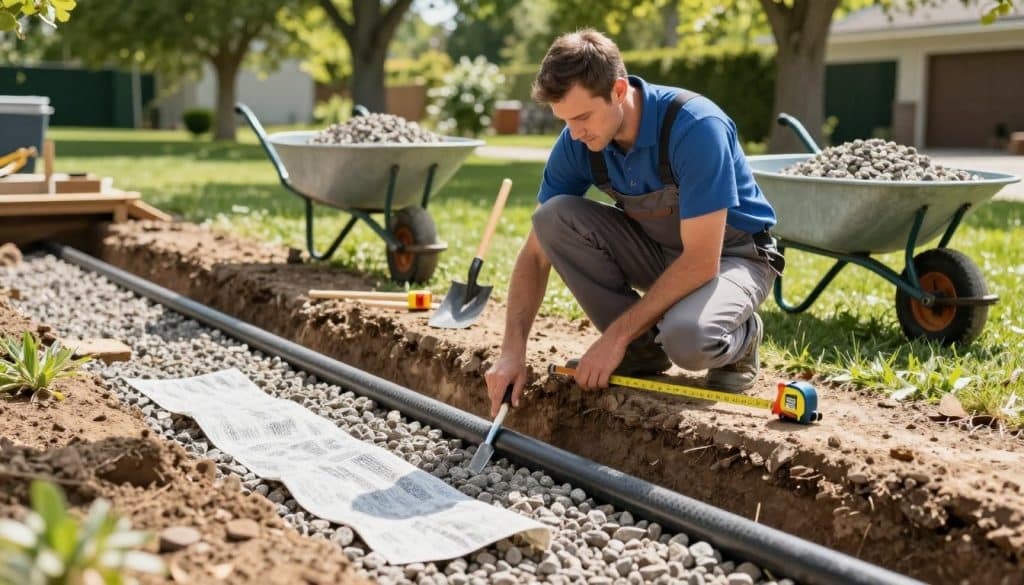
A knowledgeable contractor in a professional attire, focused on the installation of a French drain, crouching beside an excavated trench filled with coarse gravel. The foreground showcases a section of the trench with layers of gravel, perforated drainage pipe, and landscape fabric neatly laid out. In the middle ground, tools like a shovel and measuring tape are strategically placed, while a small wheelbarrow stands nearby filled with additional gravel. The background displays a lush green lawn and mature trees, with bright, natural sunlight filtering through the leaves, casting soft shadows on the scene. The overall atmosphere is one of dedication and expertise, highlighting the meticulous process of installing a French drain system with a focus on proper materials and technique.

Line, place pipe, and set slope

Line the trench with landscaping fabric to keep soil out and let water pass. Add a small base layer of rock to hold the fabric in place before you set the pipe.

Set the perforated pipe toward the outlet and make sure the holes face downward. Maintain a steady slope so water flows away without pooling.

Add material and finish the surface

Place stone in layers: a few inches under the pipe, then around and above it so the pipe sits surrounded by free-draining material. Cover the fill with fabric overlap to block fines.

  • Fold the fabric over the top to protect the system.
  • Backfill with topsoil and lay sod for a hidden look, or leave rock at the surface where you need visible channeling.
  • Take your time on slope and fabric overlap—those small steps prevent clogs and save service visits.

Why this way: These steps solve poor exterior drainage and keep water away from foundations. If you’d rather not DIY, we provide same-day written estimates in Metro Atlanta—call (678) 389-9544 or email carter@drainagefirst.com.

Estimating How Much Gravel, Pipe, and Fabric Your Yard Project Needs

Before you order materials, measure the run carefully so estimates match the reality in your yard.

  • Trench width, depth, and total length.
  • Pipe outside diameter and pipe material.
  • Property layout and outlet option so you know haul distance and staging.

Calculator approach

Compute excavation volume: width × depth × length. Subtract the pipe cylinder volume using the pipe diameter. That gives the stone volume you need per run.

Rule of thumb: a 10-inch wide, 12-inch deep trench with a 4-inch pipe needs roughly 0.72 cubic feet of stone per foot of run. Adjust that number when trench or pipe sizes change.

Fabric and contingency

Estimate fabric by measuring the trench perimeter and adding overlap. Add a waste factor (10–15%) so you don’t run short mid-project.

  • Plan staged deliveries on long runs to avoid excess on site.
  • If totals look large, call us so we can confirm slope and outlet and save you money.
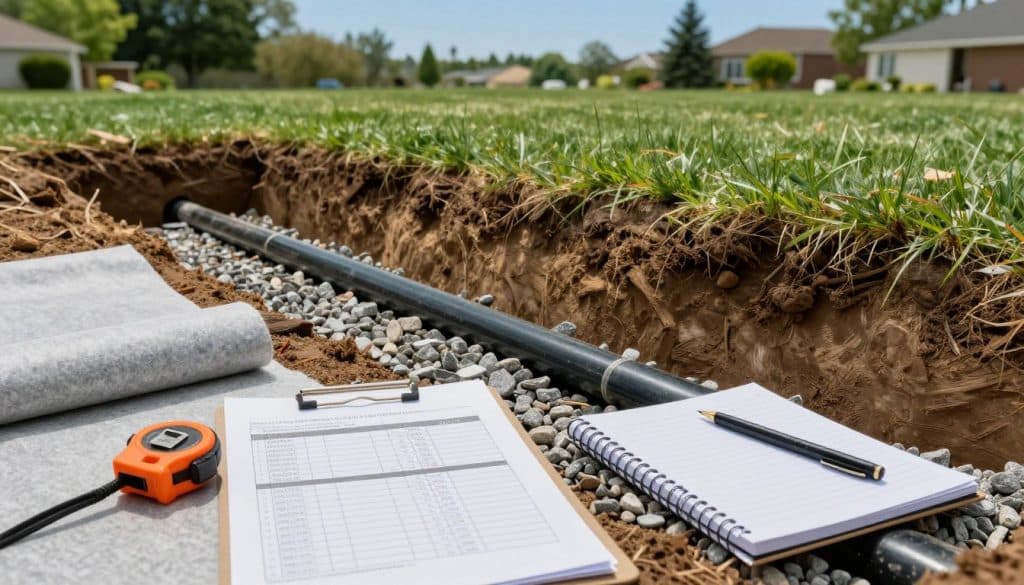
A detailed and organized estimate of trench materials for a drainage project featuring a partially excavated yard. In the foreground, a precise layout of gravel, pipe, and fabric materials is displayed, showcasing a measuring tape and a notepad with calculations. The middle ground highlights the trench itself, showing the freshly dug soil and visible layers of gravel and drainage pipe, under soft ambient lighting that emphasizes the texture of the materials. The background reveals a lush, green lawn with a clear blue sky, suggesting a serene suburban environment. The atmosphere is professional and focused, aimed at conveying the intricacies of estimating materials for efficient yard drainage. No text or distractions should be present.

Conclusion

A reliable installation turns recurring puddles into steady flow that leaves your yard dry.

Remember the essentials: correct gravel, a steady slope, proper fabric overlap, and correct pipe placement make drains last. Use washed, hard stone sized larger than the pipe perforations to limit clogging and keep water moving.

At a glance, the sequence is simple: plan the outlet, dig the trench, set slope, bed the pipe, add stone, fold the fabric, and finish the surface. These steps cut repeat visits and protect foundations in Metro Atlanta.

If you want a clear plan and a same-day written estimate, reach out to Drainage First by calling (678) 389-9544 or email carter@drainagefirst.com. We are locally owned, owner-led, and ready to help with drainage projects across Metro Atlanta.
FAQ

What is a French drain system and how does it work?

A French drain is a gravel-filled trench with a perforated pipe that redirects water away from problem areas. Surface runoff enters the trench, moves through the rock, then into the perforated pipe. The pipe carries the water downhill to an outlet, keeping basements, foundations, and yards dry.

How does water flow into a French drain—surface runoff or groundwater?

Both. Heavy rain creates surface runoff that flows into the trench. Rising groundwater seeps through soil into the rock and pipe. A well-designed system handles each source by combining proper slope, pipe placement, and filtration.

Why do slope and the right rock size matter to prevent pooling?

Slope ensures gravity moves water through the pipe to the outlet. The right rock size keeps voids open so water moves freely and doesn’t clog. Together they stop water from pooling near foundations and reduce hydrostatic pressure against walls.

What rock types perform best in a French drain?

Washed river rock and hard crushed stone such as granite chips work best. They resist breakdown, maintain void space for flow, and don’t carry fines that can clog fabric and pipe. Avoid materials that produce dust or break down quickly.

What size of rock is ideal for permeability?

Around 1 inch is a common choice for systems with a perforated pipe. That size balances permeability and stability, allowing water to flow while supporting pipe and soil above.

When should I choose larger stone, like 1½ inch?

Use larger stone for pipeless drains or designs meant to carry more volume quickly. Larger rock keeps larger voids and is less likely to compact, but it may be overkill for standard residential installs with pipe.

What rock should I avoid to prevent clogging?

Avoid pea gravel, dusty or unwashed mixes, and rock that easily breaks down. Fine particles and small rounded stones can migrate into fabric and pipe holes, reducing system life and performance.

How do I match rock size to perforated pipe openings?

Choose rock that’s significantly larger than pipe perforations so pieces don’t fall in. Properly sized stone keeps pipes accessible to water while preventing rock intrusion into holes and reducing clogging risk.

What permits or checks should I do before digging?

Call local utility marking services, check city drainage rules, and confirm outlet placement meets neighborhood ordinances. Also notify neighbors if drains discharge near shared property lines. Planning prevents costly mistakes and legal issues.

What are typical trench dimensions for a home drain install?

A common spec is roughly 9–12 inches wide and at least 18 inches deep at the shallow end. Depth varies by site, desired outlet elevation, and local frost lines. I evaluate your yard to set final dimensions.

Why is filter fabric important and how should it be installed?

Fabric blocks soil from entering the rock and pipe while allowing water through. Line the trench, place the pipe and rock, then overlap and wrap the top before backfilling. Proper overlap prevents sand and silt from washing in.

How should I position the perforated pipe for best drainage?

Maintain a continuous downward slope toward the outlet—typically 1% (1 foot drop per 100 feet) is a good target. Place the pipe with holes facing downward so water enters through the bottom and sediments settle on top of the fabric instead of inside the pipe.

What sequence should I follow when adding rock, pipe, and fabric?

First line the trench with fabric. Add a base layer of rock, set the perforated pipe on that bed, surround the pipe with more rock up to several inches above it, then fold the fabric over before final backfill. This order protects the pipe and optimizes filtration.

How do I finish the surface after backfilling?

Overlap the fabric, add topsoil, and restore sod or install decorative rock. For visible areas, choose a surface material that matches landscaping and allows maintenance access if needed.

How do I estimate how much rock, pipe, and fabric I need?

Measure trench length, width, depth, and pipe diameter. Use those numbers to calculate cubic yards of rock and linear feet of pipe and fabric. I use a simple drain material calculator approach to minimize waste and cost.

What measurements most affect material totals?

Trench width, trench depth, total length of the run, and pipe diameter. Increasing width or depth raises rock volume quickly, so accurate field measurements save money.

Can I install a system myself or should I hire help?

Homeowners can handle straightforward runs on small yards. However, I recommend professional installation for complex terrain, tight outlets, utility conflicts, or when local code compliance is required. We offer on-site assessments across the Atlanta metro to advise the best path forward.

Best Solutions

We have experience with a wide range of water issues.

See our Work

View our amazing drainage transformations.

Free Estimate

Contact us today to schedule a free consultation.

Services We Offer

What Our Customers Are Saying

Customer satisfaction is at the heart of everything we do. But don’t just take our word for it – hear what some of our happy clients have to say:

Drainage First - About Us - Contact Us

Call us now for your free estimate
24/7 Service Available

Share:

Learn More, Check Out

Send Us a Message