Have you ever wondered whether paint for waterproofing basement walls can actually prevent moisture from penetrating your foundation?
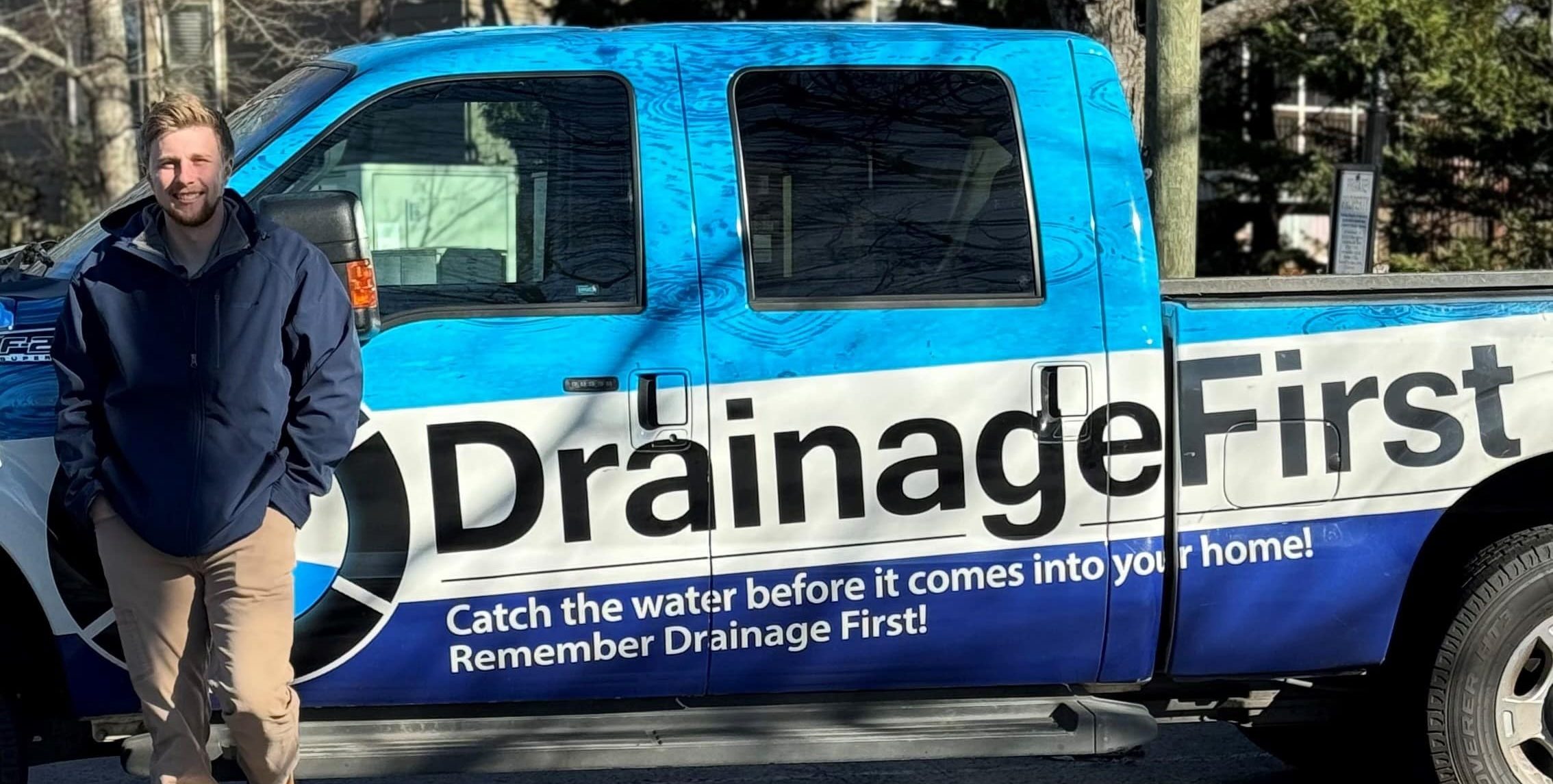
I’m the owner of Drainage First, and I help homeowners across Metro Atlanta stop basement water at the source. We’ve been locally owned and operated for over 20 years. My team and I handle service calls ourselves, give a same-day written estimate, and focus on smart, affordable fixes.
Quick truth: moisture-resistant coatings can form a surface barrier and reduce dampness. But they don’t fix the pathways that let water reach your foundation.
I’ll walk you through clear information on product claims, prep steps, and when a coating is just a temporary band-aid. We explain how we inspect where the water comes from, what the wall material is, and whether a coating makes sense as a final step.
Call (678) 389-9544 or email carter@drainagefirst.com to get a fast, owner-led assessment and a written estimate the same day.
Key Takeaways
- Coatings can cut surface moisture and odors but may not stop full leaks.
- I assess source, wall material, and drainage before recommending solutions.
- Exterior drainage and grading often stop water before it reaches the foundation.
- We offer same-day written estimates and owner-led service across Metro Atlanta.
- Use coatings as a finish step after fixing the root cause, or as a short-term fix.
What basement waterproofing paint actually does for concrete and masonry walls
Sealing the surface can tame light moisture and mildew, but it won’t repair a failing drain system. I want homeowners to know what a coating can realistically do and when it is only a temporary step.
How it works: A waterproofing product fills and covers pores in concrete and masonry. That creates a surface barrier that reduces water infiltration and visible dampness. Many formulas are breathable so trapped water vapor can escape.
Why vapor escape matters
Bulk water and vapor behave differently. Liquid seepage moves through cracks and joints. Vapor moves through the material itself. If a coating traps humidity, it can cause peeling and mildew growth.
Common problems a coating helps with
- Surface moisture sheen after light rains
- Minor dampness and musty odors
- Reducing conditions that support mildew growth on the surface
Bottom line: A coating is surface-level protection. It works best when exterior drainage and foundation issues are already addressed. In Metro Atlanta’s heavy rains and clay soil, fixing the source makes any coating far more effective. Call us at Drainage First when you need a practical, drainage-first plan.

Paint for waterproofing basement walls: how to choose the right product
The smart choice depends less on brand and more on whether the coating will face outdoor weather or indoor humidity.
Start with location: decide interior versus exterior use and whether the area is above-grade or below-grade. Exposure drives the product selection and expected performance.
Key selection points
- Check labels: some products say “not for floors.” That matters when slab moisture or foot traffic is present.
- Pressure claims up to 15 psi help with dampness but won’t stop active leaks through cracks or joints.
- Look at mold and mildew additives as a surface control, not a substitute for fixing the moisture source.
- Estimate coverage using wall area and porosity. Rough masonry often runs 75–100 sq ft/gal. Plan two coats if the maker specifies it.
- Compare warranty length, coverage, and application notes against price and quality—cheaper gallons can cost more over years if they fail.
Bottom line: pick products that match exposure and material. And remember: in Metro Atlanta, drainage and grading usually solve recurring water and moisture problems faster than another coating. Call us at (678) 389-9544 for a hands-on assessment and a same-day written estimate.
Top waterproofing paint options homeowners compare
Buyers focus on real-world performance: coverage, warranty terms, and how a product handles active moisture.
DRYLOK lineup: Original, Extreme, and Floor & Wall differ in psi claims and use cases. Pick the Floor & Wall if slab contact is possible. Expect coverage like 75–100 sq ft/gal on rough masonry and warranties that range from 7 to 15 years when surfaces are prepped right.
KILZ Basement & Masonry: Markets a nanotechnology barrier that aims to reduce infiltration on concrete and masonry. It can cut vapor transmission but still needs dry substrate and good prep to meet warranty terms.
High-humidity specialty coats: Products that claim mold and mildew resistance are useful where humidity and growth show up, but they do not stop pressure-driven leaks.
- Compare substrate match, “not for floors” labels, and real coverage.
- Longer warranties matter only with correct prep and stable moisture conditions.
- Liquid rubber adds thickness and flexibility, yet it fails if joints leak or pressure persists.
Final note: Choose quality and prep over marketing. When exterior drainage is the problem, a coating only delays the next repair. I’ll help you decide which option fits your home and when outside fixes are the smarter choice.
Surface prep checklist that determines whether waterproofing paint works
Good surface prep is the difference between a lasting coating and a wasted job. I focus on simple checks that tell me if a surface can bond and stay dry long term.
Moisture check — the finger test: Rub fingertips over the suspect area. If they come away wet, stop. Do not apply product until the area dries or the exterior drainage is fixed.

Cleaning and making the substrate sound
Remove dirt, dust, efflorescence, oil residue, and visible mildew before any application. Use a stiff brush and an appropriate cleaner to get to bare concrete or masonry.
Cure time and repainting reality
New concrete needs time. Wait a minimum of 30 days in most cases so trapped moisture won’t undermine adhesion.
Some cementitious coatings can be recoated if the old layer is sound. If the existing layer blocks penetration, the next layer will fail.
Patching cracks and voids
Fill cracks, pinholes, and gaps with fast-setting hydraulic cement before coating. Paint-like products are not designed to bridge active openings that carry water.
- Non-negotiable prep: bond and pore penetration ensure long-term quality.
- Simple test: finger test for moisture before any application.
- Fix first: recurring wet spots often point to exterior drainage issues we can correct.
Application tips for a durable waterproofing coating
I’ll keep this practical so you get it right the first time. Start by reading the label and following the product directions exactly. Do not dilute. Stir well. Work in an order that lets you finish a full face before stopping.
Coats and technique
First coat: work the product into pores and voids with pressure, not a sweep. That fills pinholes and improves coverage.
Second coat: apply after the recommended recoat time to lock in protection and avoid thin spots.
Tools and specs
- Use a 1/2″–3/4″ nap roller on rough masonry.
- Cut corners and joints with a 4″ nylon/poly brush.
- When spraying, use an airless unit around 2200–3200 psi and a .023″–.025″ tip.
Conditions and cure
Apply when air and surface temps sit between 50–90°F. Avoid direct sun and hot-to-the-touch surfaces so the coating bonds properly.
Expect dry-to-touch in ~1 hour and a typical recoat window near 4 hours. In high humidity, full cure often needs 7–14 days. Do not stress the surface until it cures.
If you see repeat moisture despite careful application, call Drainage First at (678) 389-9544. We’ll check drainage and grading so a coating can actually last.
Limitations: when waterproofing paint won’t stop basement water problems
When water is pushing in, a surface layer often can’t hold it back. Surface coatings offer useful protection against light moisture and vapor. But they are not a cure-all.
Active leaks and hydrostatic pressure
Active leaks mean water follows a path through the foundation. Under hydrostatic pressure, water can blister or peel a surface coat. That pressure pushes liquid through joints and small gaps faster than a coating can resist.
Cracks, joints, and structural movement
Cracks and cold joints are common failure points. Pipe penetrations and settling create new openings that a coating cannot bridge. Over time, repeated movement worsens infiltration and visible damage.
Warning signs you need exterior fixes
- Recurring wet lines after storms
- Puddling near the foundation or downspouts dumping at grade
- Paint failures that repeat in the same spot
Bottom line: Use coatings as a secondary layer of protection, not the primary fix. My team at Drainage First helps homeowners choose the most cost‑effective path to stop water — usually by addressing exterior grading and drainage so water never reaches the underground wall in the first place.

Paint vs exterior drainage fixes: the smarter way to stop water at the source
Most repeat moisture problems start outside the house, not on the interior face of the foundation. A surface layer can help the space look cleaner, but it won’t stop water that keeps arriving from the yard.
How poor exterior drainage leads to recurring basement moisture
When roof runoff and surface flow collect at grade, they load the underground wall and push water through joints and cracks. That cycle creates ongoing problems no surface coat can permanently outsmart.
Why improving grading and drainage is often enough to stop water from coming in
Simple fixes—moving downspouts, correcting slope, and adding compacted fill or a catchment—reduce the amount of water sitting against the foundation. In Metro Atlanta’s clay soils, these steps usually cut the wetting that causes most moisture issues.
How Drainage First differs from big waterproofing companies
- I diagnose the source and recommend the least invasive solution that protects your foundation and space.
- We do the service calls ourselves, give a written estimate the same day, and avoid upselling costly interior systems unless they are truly needed.
- We aim for fast, affordable fixes that stop water rather than hiding symptoms.
Call (678) 389-9544 or email carter@drainagefirst.com to get an owner-led assessment across Metro Atlanta and nearby areas. I’ll show which exterior fixes will likely stop water at the source and when a surface treatment makes sense as the final protection step.
Conclusion
A surface coat can improve how your space looks and cut light dampness. But lasting success depends on controlling runoff and fixing exterior drainage before coating the foundation.
Three keys to a good result: pick the right waterproofing for the wall exposure, complete proper prep, and follow the label for coverage and coats.
Don’t paint over a problem when signs point to poor grading or repeat leaks. If water keeps returning, the root cause must be fixed first.
We’re locally owned and operated for over 20 years. I offer hands‑on service and same‑day written estimates across Metro Atlanta. Call (678) 389-9544 or email carter@drainagefirst.com to get a practical, owner-led plan.