How Much is French Drain Installation? Expert Answers

On This Page

Want a quick, straight answer that actually helps? I run Drainage First, a locally owned Metro Atlanta company with over 20 years fixing water problems. I know homeowners want a clear number and an honest quote the same day.

National benchmarks matter. The average sits near $5,000. Typical ranges fall between $1,650–$12,250 and $2,800–$6,500 depending on placement and length. Low-end jobs can be $500; complex projects reach $18,000.

Prices swing because no two properties are the same. A solution can be simple surface grading or a deeper exterior system. We focus on stopping water outside the house when that makes sense. It’s often the most affordable and least disruptive choice.

I handle service calls myself, provide fast, personal service, and deliver a written, same-day estimate for Atlanta-area homeowners. In this article we’ll break costs per linear foot, show real length examples, and explain labor and material factors so you get a real quote that solves the problem.

Call us at (678) 389-9544 or email carter@drainagefirst.com to discuss solutions for your Atlanta property and stop flooding before it starts.

Key Takeaways

  • Average national cost is about $5,000, with wide ranges based on scope.
  • I prioritize exterior fixes and grading to stop water before it reaches foundations.
  • We give same-day written estimates and handle calls personally in Metro Atlanta.
  • Costs vary by placement, depth, discharge method, and access difficulty.
  • This article will break pricing per linear foot and show real examples.

How much is french drain installation in the U.S. today?

A practical starting point for planning is a $5,000 national average. Typical projects fall between $1,650 and $12,250, with a common mid-range band near $2,800–$6,500. Extremes run from $500 up to $18,000 depending on complexity.

Here are quick, numbers-first benchmarks you can use to sanity-check bids:

  • Per linear foot (exterior): $10–$65 (some guides list up to $75).
  • Per linear foot (interior): $40–$100 — interior and basement systems cost more due to pumps and repairs.
  • Why prices change: depth, slope, discharge point, and soil type matter as much as pipe length.

Real-world math examples make this clear:

  • Exterior 50 ft: $500–$3,250
  • Exterior 100 ft: $1,000–$6,500
  • Exterior 200 ft: $2,000–$13,000

Interior examples (basement system): 50 ft $2,000–$5,000; 100 ft $4,000–$10,000; 200 ft $8,000–$20,000. Remember: long pipe alone doesn’t set the final total—hard digging, deep trenches, or major restoration push costs to the high end.

Next: Learn what the system does so you pick the right solution and avoid paying for the wrong one.
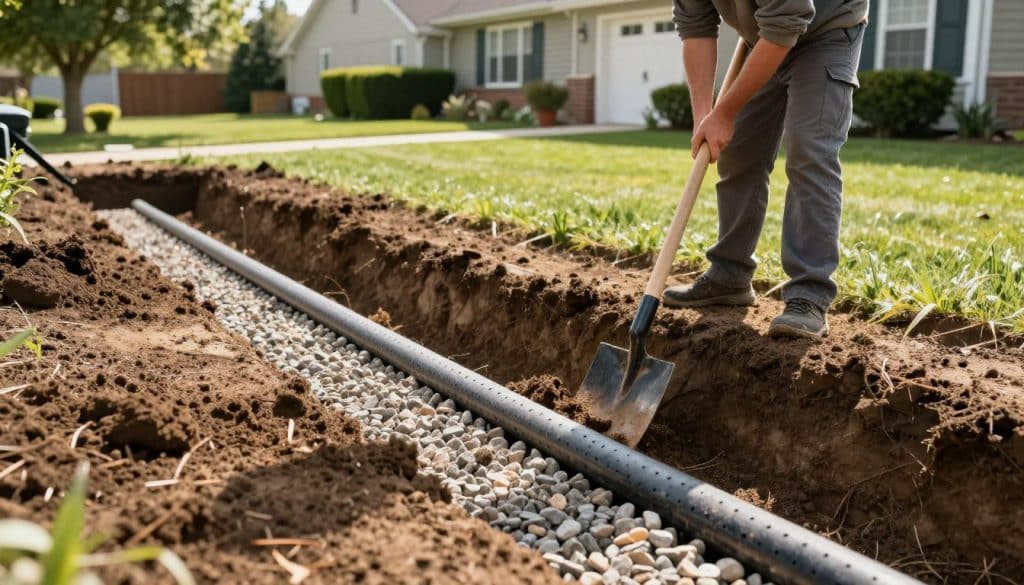
A detailed scene depicting the installation of a French drain in a residential yard. In the foreground, a professional installer in modest casual clothing uses a shovel to excavate a trench. The middle ground features a partially-installed French drain with perforated piping placed within gravel, showcasing the layers of materials used. In the background, a suburban home is visible with a well-manicured lawn, while trees and hedges frame the scene. The lighting is bright and natural, suggesting mid-morning, casting soft shadows and highlighting the texture of the soil and gravel. The overall mood is informative and practical, centered on the process of home landscaping and drainage solutions.

French drain installation basics: what it is and what it solves

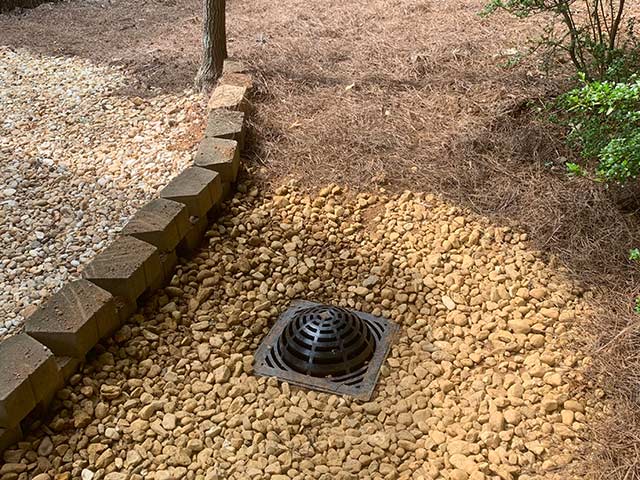
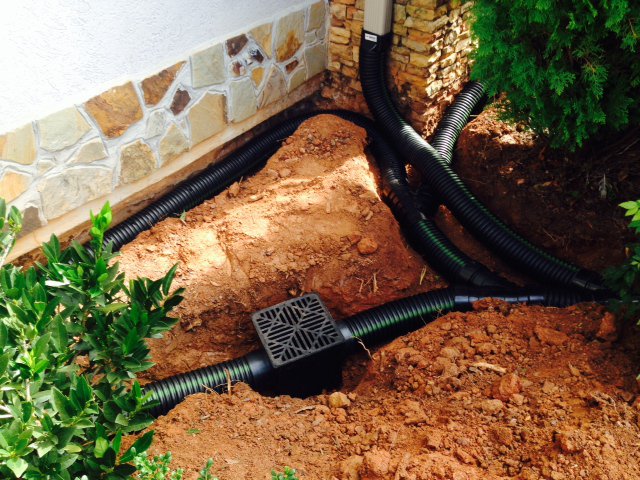
A gravel-and-pipe channel collects surface and near-surface water, then moves it off your property. In plain terms, a french drain is a gravel-filled trench with a perforated pipe that captures water and directs it to a safe discharge point.

How the system works:

  • Water soaks into the gravel and enters the perforated pipe through small holes.
  • The pipe carries the flow downhill or to a discharge area by gravity when possible.
  • At the end, water exits away from the home, yard, or basement to prevent pooling and dampness.

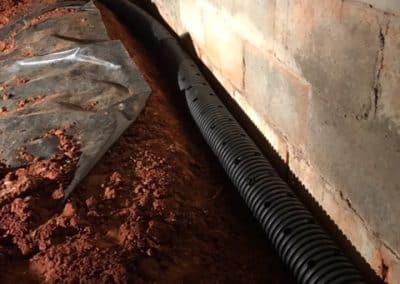
Placement matters. Exterior perimeter trenches fix saturation around foundations. Inside, drains often sit at the basement perimeter and tie to a sump. Behind retaining walls or in low spots, they stop surface runoff before it reaches structures.

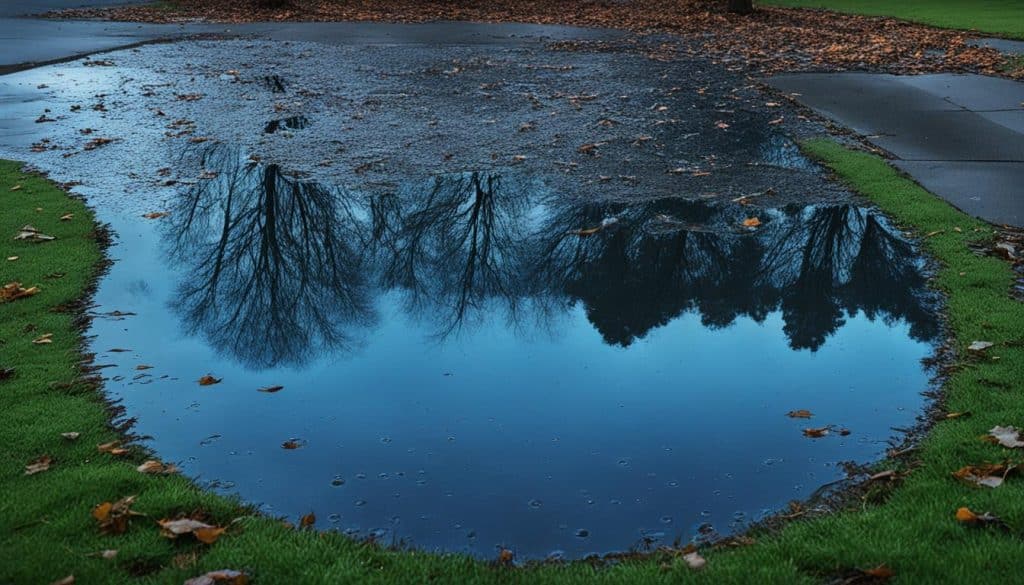
Look for warning signs: a soggy lawn that never dries, persistent pooling after rain, water near the foundation, musty basement odors, or recurring damp spots. These issues tell where the system should go.

Slope matters. If the site allows gravity drainage, the job is simpler and cheaper. Once you know where water starts and exits, you can pick the right type and avoid needless work.

French drain installation cost by type and placement

Placement and depth drive the price more than pipe length alone. Exterior runs usually cost far less per linear foot than work inside a basement. For yards or downspout issues, expect roughly $10–$65 per linear foot.

Exterior systems and best-fit scenarios

Exterior systems suit yard pooling, runoff against foundations, and hillside flow. They need less concrete work and less cleanup.

  • Best uses: soggy lawns, downspout discharge, surface runoff.
  • Per linear foot: typically $10–$65; some guides list up to $75.

Shallow vs. footing trenches

Shallow trenches save time and labor. Footing drains sit deeper and raise labor costs.

Deeper trenches mean longer excavation, more time around the foundation, and higher restoration expenses.

Interior basement systems

Basement work runs about $40–$100 per linear foot. Concrete cutting, dust control, and sump pumps add to costs.

Decision framework: I recommend fixing outside first when gravity and exit points allow. On-site checks we do: where water collects, where it can exit, and whether gravity can move it. That checklist guides fair, accurate bids.
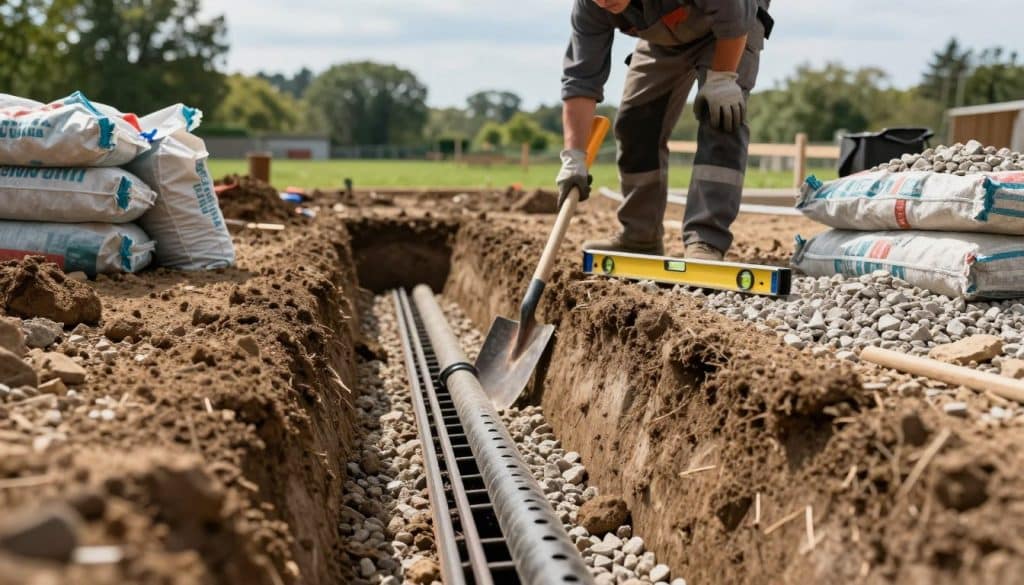
A detailed construction scene showcasing a French drain installation. In the foreground, a partially dug trench lined with gravel, with perforated pipes visible at the bottom. A worker, dressed in durable work attire and gloves, stands nearby examining the layout with a focused expression. In the middle ground, tools such as a shovel and a level are placed next to the trench, while additional gravel bags are stacked to one side. The background features a green lawn with trees and a clear blue sky, creating a serene atmosphere. Soft, natural lighting highlights the textures of the soil and gravel, while a slight depth of field blurs the background, drawing attention to the installation process.

Key factors that change French drain installation costs

Access, soil, and discharge choices change the bid more than pipe length. I inspect each property so quotes reflect real site work, not a one-price-fits-all figure.

Labor and access

Labor costs rise when equipment can’t reach the trench. Open access lets a mini-excavator finish jobs fast; narrow side yards mean hand digging and more hours.

Excavator rental is low per day, but hand work adds time and wear on crews. We price labor to match access and scope.

Soil and excavation difficulty

Clay, shale, or rocky soil slows progress and increases equipment wear. Wet clay holds water and takes longer to remove.

Materials and components

Expect pipe at about $0.50–$3 per linear foot, pea gravel $25–$53 per ton, and fabric $0.45–$0.80 per sq ft. Cheap materials often clog and raise repair bills later.

Add-ons, discharge, and restoration

  • Storm tie-ins or dry wells can add $500–$3,500.
  • Rain gardens range $1–$20 per sq ft depending on DIY vs pro.
  • Lawn repair: topsoil $11–$53/cu yd, sod $0.90–$1.80/sq ft, seeding $0.10–$0.19/sq ft.

Permits and rules

Permits typically run $58–$225. They protect neighbors and keep drainage work legal. We help homeowners get permits and include them in transparent estimates.

Buyer takeaway: The lowest bid can cost more long term if access, soil, discharge, or restoration were underpriced. I build quotes from site facts so your final costs match the real work required.

DIY French drain vs. professional installation: true price and risk

Taking on a DIY trench can save money up front, but it often adds hidden costs and time. I see good DIY results on simple exterior runs. I also see repeat trips when slope or materials are wrong.

Typical cost comparison

  • DIY example: about $528 for a 25-foot run (~$21.12 per linear foot) or roughly $700 in other guides.
  • Pro pricing: exterior roughly $10–$75 per linear foot; interior and basement work $40–$100 per linear foot.
  • Sump pump add-on: plan $625–$2,625 when gravity exit isn’t possible.

Common DIY mistakes that raise total cost

  • Wrong slope — water can flow back toward the house.
  • Skipping fabric or using the wrong gravel — leads to clogging and early failure.
  • Hitting utilities or discharging toward a neighbor — legal and repair costs rise fast.

Real DIY work means planning slope, trenching, moving spoil, laying fabric, placing gravel, and testing flow before backfill. Factor in tools, rentals, hauling, and your time. If the problem threatens the foundation or basement, I recommend a pro. We focus on fixing the cause, not just treating the symptom.

Getting an accurate quote for your drainage project in Metro Atlanta

Get a clear, site-based quote by measuring a few simple things around your yard before we arrive. A short pre-check helps me price fairly and avoid surprises on day one.

What to measure before you call

In ten minutes note the approximate length and size of the problem area. Mark where water first appears and where it could safely discharge.

  • Length of the soggy zone (feet)
  • Location: perimeter, low spot, or near a downspout
  • Soil type: soft, clay, or rocky

What to include in a written estimate

A professional quote should list linear footage, depth or type, materials (pipe, gravel, fabric), a discharge plan, timeline, labor, and landscaping restoration.

Why we focus on exterior drainage and grading

At Drainage First I prefer exterior fixes and grading when they stop the problem at the source. This approach often avoids disruptive interior systems and lowers cost.

Work with a local, hands-on team

We are locally owned and operated for over 20 years. I make all service calls myself and provide a same-day written estimate so homeowners in Metro Atlanta move from quote to work quickly.

Request your same-day written estimate: (678) 389-9544 or carter@drainagefirst.com. Permit estimates range $58–$225 where required.
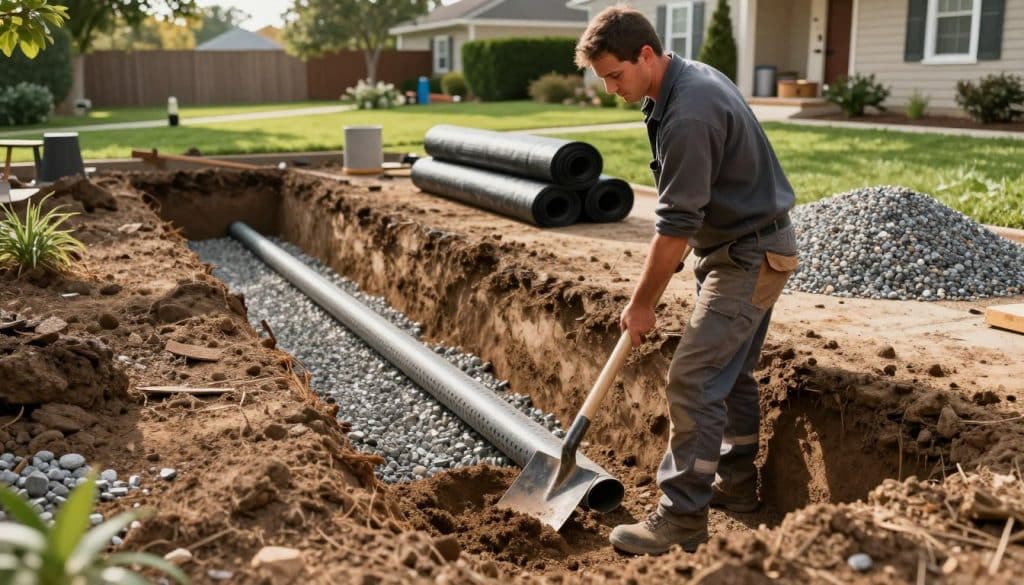
A detailed illustration of an exterior French drain installation, showcasing a worksite in a suburban setting. In the foreground, a skilled contractor in professional work attire is carefully digging a trench with a shovel, revealing the gravel and perforated pipe. The middle ground features various materials, including rolls of drainage fabric and piles of gravel, neatly arranged for the installation. In the background, a well-maintained lawn with trees under soft natural light emphasizes the residential environment. The scene captures a mid-afternoon atmosphere, with gentle shadows indicating the sun's position. The angle is slightly elevated, providing a comprehensive view of the installation process while ensuring the focus remains on the drainage work without any distractions.

Conclusion

Smart scope, accurate permits, and a written quote protect homeowners from surprise costs. A national average near $5,000 helps with planning, while real projects range from about $500 to $18,000 depending on site work and water control.

Quick pricing takeaways for easy comparison:

– Per linear foot: exterior roughly $10–$65; interior about $40–$100.

– Sump pump add-on: plan $625–$2,625. – Permits: typically $58–$225.

I favor exterior-first drainage and grading because it often stops basement moisture and lowers total costs, which is why proper french drain installation is so important. Final bids hinge on labor costs, soil, access, materials like gravel, fabric, and pipe, and landscaping restoration.

DIY can work for simple runs, but slope errors, clogs, or wrong discharge raise long-term repair costs.

Ready for a clear plan and same-day written estimate? Call Drainage First: (678) 389-9544 or carter@drainagefirst.com. I’ll inspect, recommend the right system, and give a firm, local quote the same day.
FAQ

What is a French drain and what problems does it solve?

A French drain is a perforated pipe set in a gravel-filled trench that redirects surface and groundwater away from foundations, basements, and soggy lawns. I use it to lower hydrostatic pressure against walls, stop pooling, and protect landscaping. It’s a passive system that relies on gravity and proper grading to move water to a safe discharge point.

What are common signs that my yard or basement needs a drainage system?

Look for persistent pooling, muddy or spongy turf, wet basement walls, efflorescence, or water staining. Frequent downspout overflow, soggy low spots after rain, and interior floor seepage are red flags. I assess these symptoms on site to recommend the right solution.

What does a typical exterior installation cost per linear foot in the U.S. today?

Nationally, basic exterior installs often fall in a common range per linear foot, with a national average that homeowners see frequently. Exact price varies by trench depth, access, and materials. For a precise figure for your property in Metro Atlanta, I’ll evaluate soil, length, and discharge needs before quoting.

How do interior basement systems compare in price per linear foot?

Interior drains require demolition, sub-slab work, and often a sump pump and pit. That work raises labor and material costs per linear foot compared with exterior options. I only recommend interior systems when exterior fixes won’t stop interior water.

Can you give real-world cost examples by pipe length?

Typical projects vary: short runs on easy sites cost less, while long runs or tight access raise the total. A 50-foot exterior run on easy soil will cost far less than a 200-foot run through rocky ground. I provide sample estimates during on-site visits so you see line-item pricing.

How do soil type and excavation difficulty affect overall price?

Clay, rock, and compacted fill slow excavation and increase labor time and equipment needs. Soft loam is easier and cheaper. If I need an excavator, jackhammer, or extra crew, those add directly to labor costs and project time.

What materials affect the budget—pipe, gravel, and fabric?

Perforated ADS or PVC pipe, clean drain rock, and geotextile fabric are core costs. Higher-grade pipe, specialty fabric, or greater rock volume increases material spend. I specify materials that balance longevity and value for Atlanta soils and rainfall.

When do deeper footing drains raise costs significantly?

Footing drains require deeper trenches near foundations, sometimes below frost lines or footings. That depth means more excavation, bracing, and backfill restoration. Those safety and structural requirements increase labor, time, and permit needs.

What add-ons should I expect and how do they change price?

Common add-ons include dry wells, storm drain tie-ins, rain gardens, and sediment traps. These improve discharge and longevity but add materials and labor. I recommend add-ons when they prevent future clogs or protect neighbors’ properties.

How much does landscape and lawn repair add to the bill?

Topsoil, seed, sod, or paver replacement varies by area disturbed. Minor trenching may need seed and topsoil; larger runs often require sod or landscape repair. I include restoration options in every estimate so there are no surprises.

Are permits required in Metro Atlanta, and what do they cost?

Some projects need local permits, especially footing or extensive public right-of-way work. Fees vary by city; smaller exterior jobs may avoid permits, while larger or deeper work won’t. I help customers handle required permits and include typical permit ranges in written estimates.

What’s the true difference in cost and risk between DIY and hiring a pro?

DIY saves labor dollars but carries risk—improper slope, clogged pipe, poor discharge, or damage to utilities. Mistakes often increase lifetime cost. Hiring a pro delivers correct grade, reliable materials, and warranty protection. I lay out the trade-offs and likely lifetime cost when we assess your yard.

What DIY mistakes drive up total project cost?

Common errors include incorrect slope, failing to wrap pipe in fabric, undersized pipe, and poor discharge placement. Each leads to clogging or failure that requires rework. I show homeowners how to avoid these when DIY is feasible.

When will a sump pump be necessary and what does it add to the price?

If interior water collects below floor level or gravity discharge is impossible, a sump pump becomes necessary. Costs include pit excavation, the pump, battery backup options, and electrical work. Pumps add both parts and labor but protect interiors effectively.

How should I measure my property before requesting a quote?

Measure the length of the problem area, note water source locations, mark where water currently exits, and identify desired discharge points. Photos and rough sketches speed the process. I use those details to prepare an accurate, same-day written estimate.

What should a written estimate from a contractor include?

A proper estimate lists scope, trench length and depth, pipe and rock type, fabric, labor, permit fees, timeline, and landscape restoration. I include those line items and a clear warranty so you know exactly what you’re buying.

Why does Drainage First focus on exterior solutions and grading?

Exterior fixes often solve the root cause before interior water occurs. They’re less invasive and more cost-effective over time. My goal is to restore proper surface flow and keep water away from foundations with common-sense, durable solutions.

Do you serve all of Metro Atlanta and nearby areas?

Yes. We provide fast, personal service across Atlanta and surrounding communities. I handle local permitting, soils assessment, and landscape restoration to deliver a complete solution tailored to Georgia conditions.

How can I request a same-day written estimate?

Call (678) 389-9544 or email carter@drainagefirst.com. I’ll walk you through what to measure, schedule a site visit, and provide a detailed written quote the same day when possible.

Best Solutions

We have experience with a wide range of water issues.

See our Work

View our amazing drainage transformations.

Free Estimate

Contact us today to schedule a free consultation.

Services We Offer

What Our Customers Are Saying

Customer satisfaction is at the heart of everything we do. But don’t just take our word for it – hear what some of our happy clients have to say:

Posted on Google Google
Nancy Rudy profile picture
Nancy Rudy
Google star 1Google star 2Google star 3Google star 4Google star 5Trustindex verifies that the original source of the review is Google.
Carter was exceptional!! He came out today to check a potential drainage issue around my basement doors. After a thorough inspection, he determined that I only needed a handyman to replace the threshold, rather than his company's services. I especially appreciated his honesty and integrity. He didn't try to sell me unnecessary services. I will definitely keep his business card for the future.
Posted on Google Google
Dennis Fox profile picture
Dennis Fox
Google star 1Google star 2Google star 3Google star 4Google star 5Trustindex verifies that the original source of the review is Google.
Drainage First is truly an excellent source to fix your drainage/irrigation issues. Carter applies knowledge handed down and first hand experiences. Our issue was fixed as laid out and on time. His crew left a clean finished product. Highly recommend this organization.
Posted on Google Google
Karen & Dan Brown profile picture
Karen & Dan Brown
Google star 1Google star 2Google star 3Google star 4Google star 5Trustindex verifies that the original source of the review is Google.
Carter & his team showed up on time, did the work requested, & cleaned up. Carter answered all of my questions.
Posted on Google Google
Pam White profile picture
Pam White
Google star 1Google star 2Google star 3Google star 4Google star 5Trustindex verifies that the original source of the review is Google.
Carter and the Drainage First team did a great job fixing the issues I had with my French Drain, which was getting completely overwhelmed by all the rain we’ve had. Carter first came out with a scoping camera and showed me the issues in real time, and talked over potential solutions. He didn't try to sell me a whole new system, but instead was able to walk me through what exactly needed to be repaired. I was able to receive the quote pretty quickly and schedule them to come out and do the repairs. They were quick and efficient, and did a great job of leveling out the part of the yard that needed to be dug. I would highly recommend using this company for any drainage needs.
Posted on Google Google
Corey Andre profile picture
Corey Andre
Google star 1Google star 2Google star 3Google star 4Google star 5Trustindex verifies that the original source of the review is Google.
Cannot recommend Drainage First enough! This was the first company that actually worked with me to give a customized quote to repair what was necessary vs. just recommending to replace a whole system. Carter was fantastic to work with and was fast, responsive, and knowledgeable. Thanks so much!
Posted on Google Google
Carol Herrmann profile picture
Carol Herrmann
Google star 1Google star 2Google star 3Google star 4Google star 5Trustindex verifies that the original source of the review is Google.
I had some drainage problems related to French drains installed years ago and Carter came to my house at 12 noon as promised and performed a thorough assessment of the basement and drains. He was able to reattach one drain and advised me how how to fix the other one. His office staff was also very helpful and responsive to communications. I recommend them highly without reservation!
Posted on Google Google
Marcin W profile picture
Marcin W
Google star 1Google star 2Google star 3Google star 4Google star 5Trustindex verifies that the original source of the review is Google.
Carter and Traci at Drainage First completely solved my water drainage issues. He and his team installed downspout drains and catch basins throughout the yard and for 3 years it has held up solidly with no issues. Before they installed the drains, I had a river running through my yard to the street every time it rained heavily. Now it's all washed down into the drains and I never have to worry about the landscape being washed away. Easy 5 start review.
Posted on Google Google
Diane Weinberg profile picture
Diane Weinberg
Google star 1Google star 2Google star 3Google star 4Google star 5Trustindex verifies that the original source of the review is Google.
Absolutely the BEST! Carter explained in detail what my water issue was and the best route for repair. Carter and his crew arrived on time, were professional ,and took great care in getting the job done. I highly recommend Carter and Drainage First for all of you water/Drainage issues!
Posted on Google Google
Nick Serba profile picture
Nick Serba
Google star 1Google star 2Google star 3Google star 4Google star 5Trustindex verifies that the original source of the review is Google.
👍Drainage First did a Professional job…Carter did what they said they would do, helping resolve a difficult problem in my home . He also “went above” what most contractors have done on other jobs regarding excellent cleanup…👍
Verified by Trustindex
Trustindex verified that these reviews were published on Drainage First's Google Business Profile. Learn more
Drainage First - About Us - Contact Us

Call us now for your free estimate
24/7 Service Available

Share:

Learn More, Check Out

Send Us a Message